How to Choose a Prop Firm in 2026
Picking the wrong prop firm costs you money and time. Here are 7 things every trader should check before signing up, including red flags most beginners miss.
Most traders spend more time picking their trading strategy than picking the prop firm they trade on. That is backwards.
A bad prop firm will take your challenge fee, move the goalposts on the rules, delay your payout, or simply disappear. Picking the right one from the start saves you real money and avoids the frustration of starting over.
Traders in the US, UK, and across Europe are increasingly finding that the prop firm they choose matters as much as the strategy they trade. Here are 7 things to check before paying any prop firm.
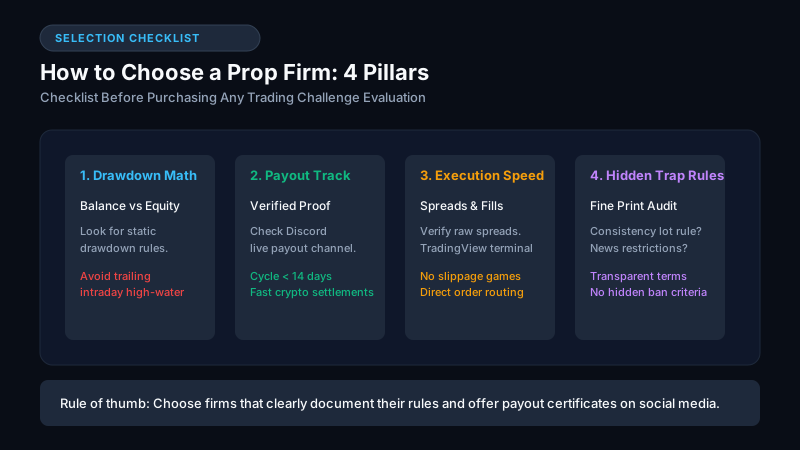
1. Read the Full Rules Before You Pay
This sounds obvious but most traders skip it. Every prop firm has a challenge rulebook. Before you pay the challenge fee, read it.
Look for three things: the maximum daily loss limit, the maximum total drawdown, and whether trailing drawdown applies. Trailing drawdown means your maximum loss floor rises as your account grows, which catches a lot of traders off guard.
If the rules are not publicly posted in plain language, that is the first red flag.
2. Check the Payout Track Record
A prop firm's payout history matters more than their marketing. Search the firm name plus "payout proof" on Reddit, Trustpilot, and X. Look for recent posts from the last 3 months, not just old ones.
Slow payouts, delayed withdrawals, or firms that stop responding after a breach are common complaints. A firm that cannot show a clean payout record in recent months is a genuine risk.
Ask directly before buying: what is the standard payout processing time? The answer should be 1 to 5 business days. "It depends" is not an acceptable answer.
3. Test the Platform Before You Pay
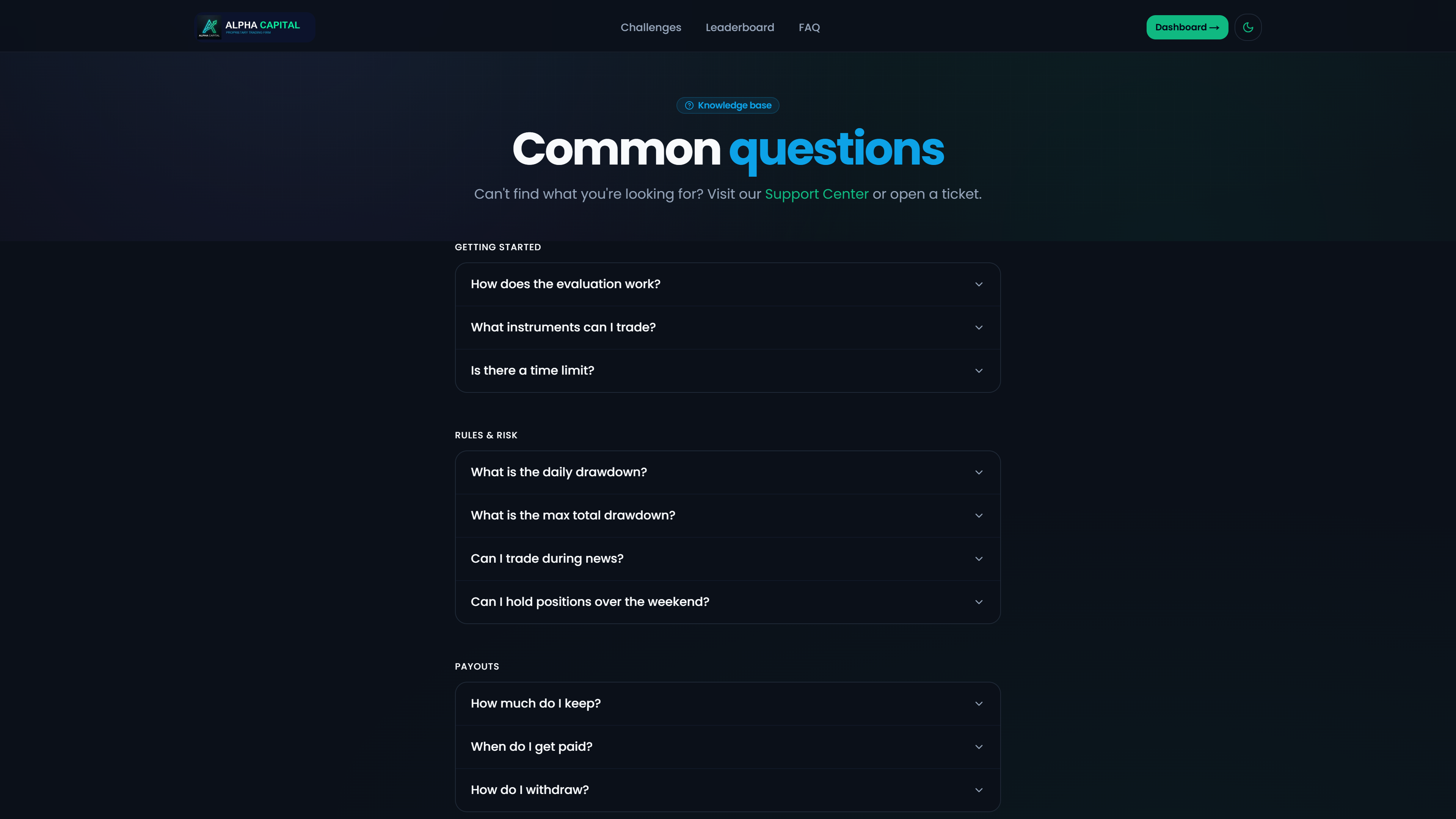
Good prop firms give you demo access before you spend anything. If a firm does not let you see the trader dashboard before paying, walk away.
What to check in the demo: does it show your drawdown status in real time? Are your challenge rules visible without contacting support? Can you track your trading history clearly?
A platform that is confusing to navigate when you are browsing is usually confusing to deal with when it actually matters, like during a payout request.
Skip the monthly fees
Own your prop firm platform outright. One time purchase.
Full source code. Live in 7 days. No revenue share. No monthly SaaS bill. See the exact platform before paying anything.
Demo login: haris / asdf1122. No signup needed
4. Understand What Happens When You Fail
Most traders fail at least one challenge before passing. The question is: what does failing cost you?
Some firms offer a free retry if you fail within the first 5 to 10 days. Others offer discounted resets. Others charge full price every time. A firm that offers zero retry policy is built around your failure, not your success.
Check this before paying, not after.
5. Verify the Profit Split Terms
Standard profit splits in 2026 range from 70/30 to 90/10 in the trader's favor. Anything below 70% is below market rate and should be questioned.
Some firms advertise 90% splits but reduce the percentage after scaling, or apply platform fees that lower your net payout. Read the profit split terms for every stage of their scaling plan, not just the starting account.
6. Check Account Sizes and Scaling Rules
Start with an account size you can trade without overtrading. A $10,000 or $25,000 account is the right starting point for most traders. Jumping straight to a $100,000 challenge to maximize potential profits usually ends with a faster fail and a larger fee lost.
A good firm has a written scaling plan: if you hit the targets consistently, your account grows. The criteria for scaling should be specific numbers, not vague language like "at our discretion."
7. Verify They Are a Real Operation
Risk Warning: The prop firm industry is unregulated in most countries. There is no deposit protection scheme and no regulator to complain to if a firm disappears. Due diligence before paying is your only protection.
Legitimate prop firms have a company name, a real website, a published dispute policy, and a support channel that responds. They do not operate purely through Discord with no website. They do not accept payment through personal PayPal accounts.
Before buying, send their support team an email or message and time the response. The support response speed before you pay is usually the best version you will ever get from that firm.
Most traders in the United States and United Kingdom who have been burned by a prop firm say the same thing: the warning signs were there before they paid, they just did not check.
The Checklist at a Glance
| Criteria | Good Sign | Red Flag |
|---|---|---|
| Rules document | Public and specific | Vague or hidden |
| Payout time | 1-5 business days stated | "It depends" |
| Demo access | Free before payment | Requires purchase |
| Fail policy | Free retry or discount | Full price every time |
| Profit split | 70-90% trader | Below 70% |
| Scaling | Written percentage targets | "At our discretion" |
| Support | Responds in 24 hours | No response pre-sale |
Platform Quality Is Part of the Decision
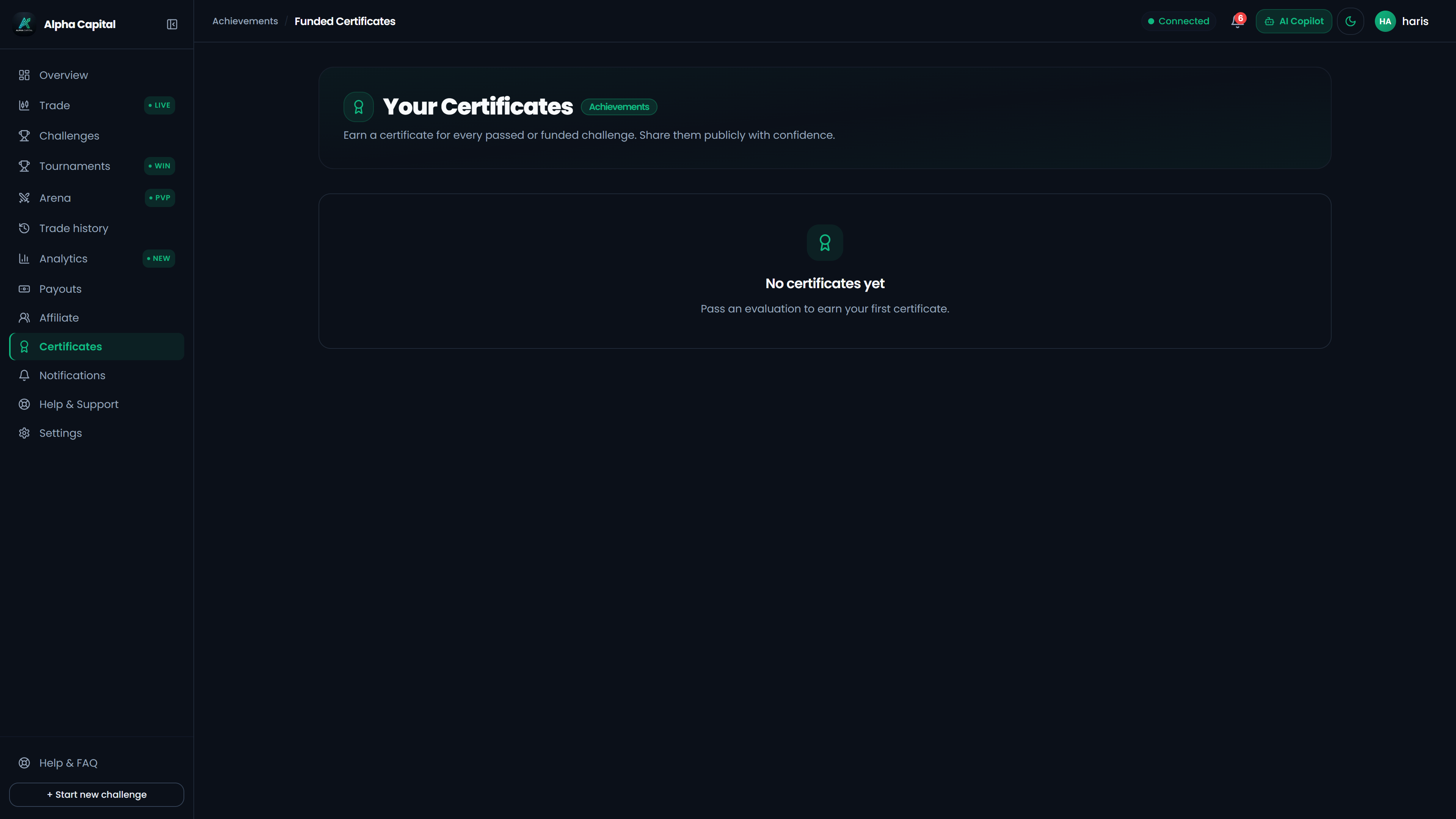
The firm is only as reliable as the software they run on. A well-built platform shows your drawdown in real time, processes payouts automatically, and generates a certificate when you pass. A poorly-built one requires you to contact support just to check your current status.
You can see what a properly built trader dashboard looks like at the LaunchPropFirm demo at demo.launchapropfirm.com. LaunchPropFirm powers the back-end of white-label prop firms, and the trader experience shows you exactly what to expect from a well-built platform.
FAQ
How do I know if a prop firm is legitimate?
Check their company registration or business details, read reviews on Trustpilot and Reddit from the last 3 months, verify payout evidence, and test their support response before paying. Legitimate firms have public rules, a real website, and a contact that responds.
What is a fair profit split at a prop firm?
70/30 in the trader's favor is the market baseline for 2026. 80/20 and 90/10 splits are offered by competitive firms. Anything below 70% is below standard.
Should I start with a small or large account size?
Start with the smallest account that still makes the profit target meaningful. For most beginners, $10,000 to $25,000 is enough to learn the challenge format without excess financial pressure. Larger accounts have larger absolute drawdown limits, but the percentage rules are usually identical.
What happens if I fail a prop firm challenge?
You lose the challenge fee unless the firm offers a free retry or discounted reset. Always check the firm's retry policy before paying. Some firms offer a reset if you fail within the first 5 to 10 days of the challenge.
Are prop firms regulated?
No. Prop trading firms are not regulated financial institutions in most jurisdictions, including the United States and United Kingdom. They are private companies offering internal trading programs.
There is no regulatory body overseeing payouts or protecting your challenge fee if a firm closes. This is why vetting the firm before paying is the only protection you have.
Evaluate Your Prop Firm Readiness Score (0-100)
Answer 5 quick operational questions about your acquisition channels, runway, and engine tech to get a personalized launch roadmap.
Prop Firm Monthly Profit Simulator
Simulate your challenge revenue, payout liability, and net monthly take-home profit.
$20,000
From upfront challenge fees-$2,800
~10 funded payouts budgeted$0 / month
Saves $3,000/mo vs SaaS$17,200/mo
Run-rate: $206,400/yr
M.Haris
Founder & Platform ArchitectBuilding open prop trading software infrastructure for operators worldwide
I built LaunchPropFirm to give forex educators, trading communities, and fintech operators complete ownership of their platform with full source code and zero monthly SaaS rent. Every article on this blog is drawn from hands-on platform development, live MT5 risk bridge mechanics, and real operator economics.
All content, financial models, ROI estimates, and architecture guides on LaunchPropFirm are published strictly for educational and informational purposes. LaunchPropFirm provides institutional prop trading software and technology infrastructure; it does not operate as a broker, custodian, or registered investment advisor.
Evaluation challenges and funded trader accounts referenced in this guide operate in simulated demo trading environments using real-time market data feeds. Simulated trading results do not represent actual trading performance or financial advice.
Recommended Next Reads
Hand-picked operator guides to scale your prop trading platform.
Funding Pips Account Sizes and Prices 2026: Evaluation Tiers, Rules, and Scaling Plan
Complete 2026 Funding Pips account sizes and prices guide. Compare challenge fees ($5k to $100k), 2-step evaluation rules, drawdown limits, and the $2M scaling plan.
List of Prop Trading Firms (2026 Directory): Best Evaluated and Instant Funding Programs
Complete 2026 list of prop trading firms. Compare the top 6 evaluated prop firms across platforms (MT5, cTrader), drawdown rules, profit splits, and entry fees.
Skip the monthly fees
Own your prop firm platform outright. One time purchase.
Full source code. Live in 7 days. No revenue share. No monthly SaaS bill. See the exact platform before paying anything.
Demo login: haris / asdf1122. No signup needed