Prop Firm Weekend Holding Rules (2026)
Learn prop firm weekend holding rules for 2026. Understand standard vs swing accounts, Friday market close cutoff times, gap risk, and firm payout rules.
Holding active positions over the weekend is one of the most misunderstood aspects of proprietary firm trading. Many swing traders enter high-probability technical setups on Thursday or Friday, expecting to ride multi-day market momentum into the following week. When the weekend arrives, traders frequently discover that their evaluation accounts have been liquidated or breached due to strict Friday cutoff policies.
Prop firm weekend holding rules exist to protect simulated capital pools from uncontrollable gap risk and illiquid market openings. While some challenge types strictly prohibit holding trades past Friday afternoon, specialized swing accounts permit multi-day holding under modified conditions.
Understanding these operational rules prevents unexpected challenge disqualifications and protects accrued payout splits.
Why Prop Firms Restrict Weekend Holding
Foreign exchange and global futures markets shut down physical trading desks between Friday evening and Sunday afternoon. During this 48-hour trading pause, world events, geopolitical conflicts, and surprise economic developments continue to unfold uninterrupted.
When global trading resumes on Sunday afternoon at 5:00 PM Eastern Time, price quotes frequently open far away from Friday closing levels. This price disparity creates what institutional desks call a weekend market gap. If a trader holds a 10-lot position through a 75-pip weekend gap against their direction, their stop loss order cannot execute at the requested level.
The order executes at the first available market price on Sunday open, incurring severe slippage. In an evaluation environment, that single gap can easily blow through a trader's maximum daily loss limit before the platform can intervene.
To understand how daily loss thresholds operate during volatile periods, read our detailed breakdown of prop firm drawdown rules.

Standard Accounts vs Swing Accounts
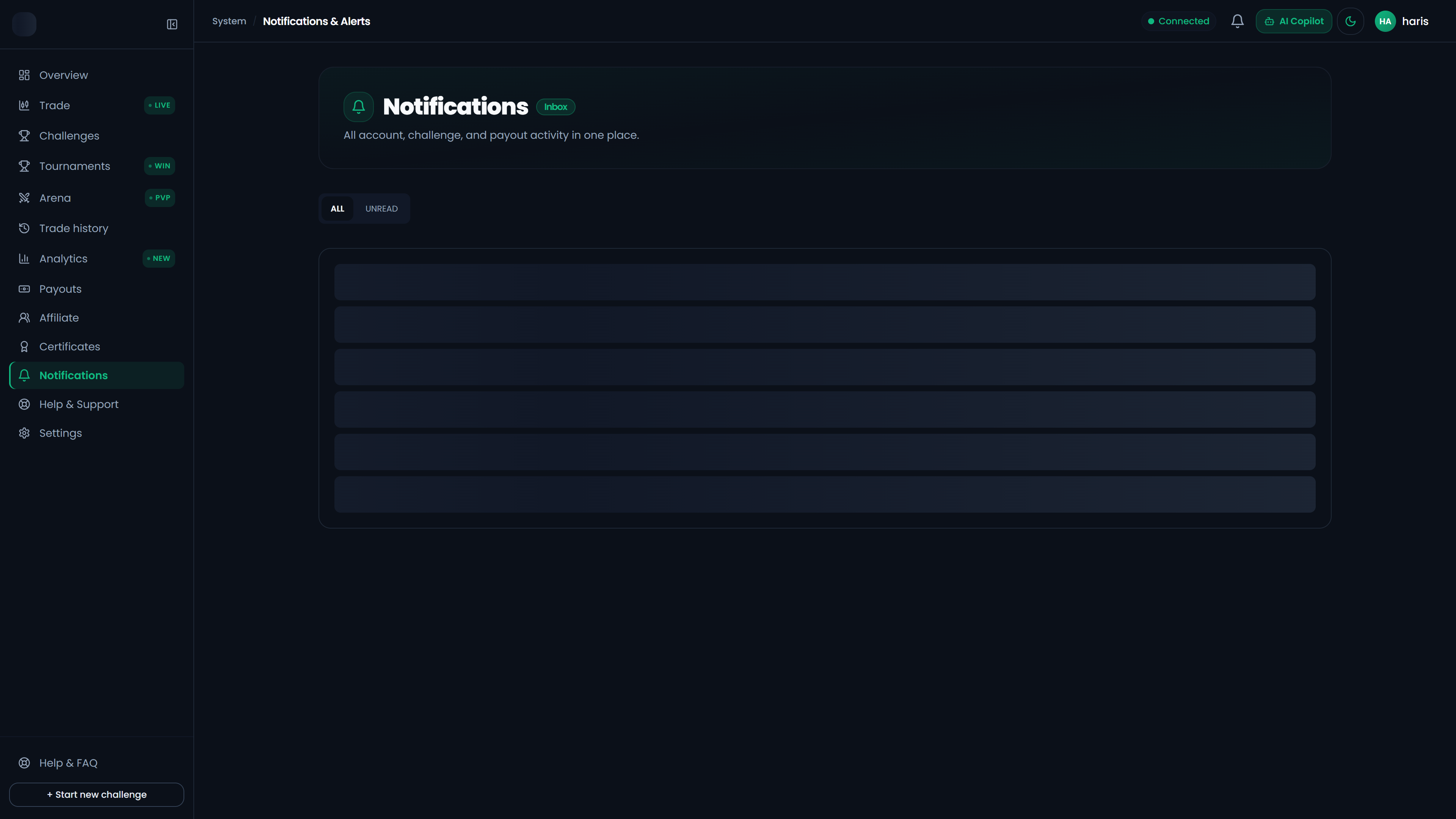
Proprietary trading firms separate challenge packages into standard day-trading tiers and swing-trading tiers. Each model serves a distinct trader profile and enforces different weekend exposure limits.
Standard Day-Trading Accounts
Standard challenge accounts prioritize higher buying power and tighter spreads for intraday scalpers. Because the firm grants high exposure multipliers of up to 1:100, they cannot tolerate unpredictable weekend price gaps.
On standard accounts, all open trades and pending limit orders must be completely closed before the Friday cutoff bell. If you fail to close your positions manually, the platform's automated liquidation engine will close them for you at current market prices.
Some firms treat failing to close trades as a hard rule violation that terminates the account immediately. Other firms enforce a soft breach where open tickets are automatically liquidated without disqualifying the trader.
Dedicated Swing Trading Accounts
Swing trading accounts are configured specifically for traders whose technical edges require holding positions across multiple days or weeks. On swing models, the firm allows you to hold trades over the weekend without manual liquidation.
To offset the increased gap risk of weekend holding, evaluation firms adjust account parameters. Swing accounts typically offer lower exposure ratios, such as 1:30 instead of 1:100.
Lower account exposure reduces the maximum lot size a trader can open, ensuring that an adverse 100-pip weekend gap will not instantly breach maximum drawdown limits.
Risk Warning: Stop loss orders do not protect against weekend gaps. If the market opens past your stop loss on Sunday afternoon, your trade fills at the gapped open price, which can cause an instant account breach.
Friday Cutoff Times Across Major Markets
Different asset classes close at varying times on Friday afternoon. Traders must monitor the exact platform server clock rather than their local time zone to avoid accidental violations.
| Asset Class | Market Close Time (EST) | Mandatory Cutoff Buffer | Recommended Manual Exit |
|---|---|---|---|
| Forex Currencies | Friday 5:00 PM EST | 4:55 PM EST (5 min prior) | Friday 4:30 PM EST |
| US Equity Indices | Friday 4:15 PM EST | 4:10 PM EST (5 min prior) | Friday 3:45 PM EST |
| Commodities (Gold/Oil) | Friday 5:00 PM EST | 4:55 PM EST (5 min prior) | Friday 4:30 PM EST |
| Crypto CFDs | Open 24/7 (Varies) | No Cutoff on Select Pairs | Monitor Weekend Volatility |
| CME Futures | Friday 5:00 PM EST | 4:55 PM EST (Strict Hard Stop) | Friday 4:00 PM EST |
Most forex pairs pause at 5:00 PM Eastern Time on Friday. Proprietary firms requiring weekend closure typically enforce a cutoff window between two and ten minutes prior to market close.
If your firm specifies a five-minute buffer, every market order must be closed by 4:55 PM EST. Waiting until 4:59 PM is dangerous because market liquidity dries up, causing spreads to widen significantly and increasing execution costs.
Review our detailed guide on prop firm news trading rules to see how buffer windows operate during high-impact market releases.
Skip the monthly fees
Own your prop firm platform outright. One time purchase.
Full source code. Live in 7 days. No revenue share. No monthly SaaS bill. See the exact platform before paying anything.
Demo login: haris / asdf1122. No signup needed
Triple Swap Fees and Financing Costs
Holding positions across the weekend introduces overnight financing charges known as swap fees. Brokerages calculate swap rates based on interest rate differentials between the currency pairs you hold.
On Wednesday afternoons, forex brokers charge triple rollover swaps to account for weekend settlement. When you hold an open position through Friday night into Monday morning, additional financing charges accrue against your account equity.
Holding high-volume positions on high-interest currency pairs like USDZAR or EURTRY can cost hundreds of dollars in swap deductions. These financing fees diminish your account equity and reduce your distance from maximum drawdown limits.
Traders who combine weekend holding with cross-pair strategies should also review our guide on prop firm hedging rules to avoid violating portfolio risk caps.
How LaunchPropFirm Manages Weekend Risk
Prop firm infrastructure must enforce weekend risk parameters automatically without manual operator intervention. Managing hundreds of active challenge accounts by hand during Friday close is mathematically impossible.
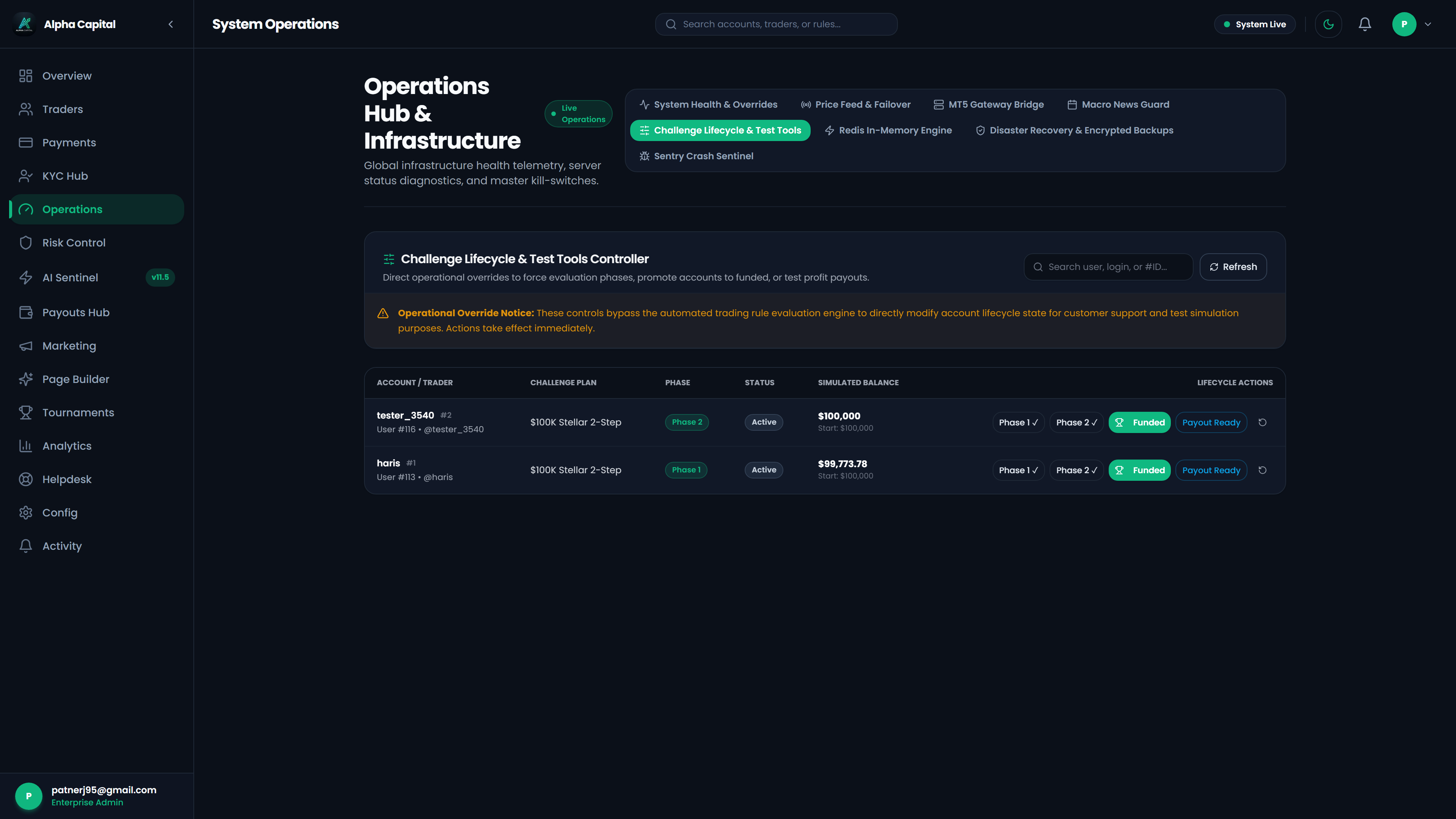
At LaunchPropFirm, our institutional risk engine automates weekend exposure control through customizable server rules. Platform operators can tailor policies to match their exact business model:
- Automated weekend cron liquidations: The platform can auto-liquidate standard accounts at a pre-set cutoff minute while isolating dedicated swing accounts.
- Soft breach versus hard breach triggers: Operators configure whether weekend holding results in a gentle trade auto-close or an immediate rule disqualification.
- Margin requirement stepping: The risk dashboard can dynamically adjust required margin ratios heading into Friday close to deter over-sized intraday bets.
- Sunday market open gap shields: The system calculates equity impact across opening price feeds to prevent negative balance anomalies on funded accounts.
Operator Tip: Modern risk management platforms like LaunchPropFirm track server timestamps across symbols to identify coordinated group hedging instantly.
For founders launching an independent proprietary brand, offering both standard scalping accounts and swing evaluation tiers maximizes challenge sales. Explore our complete white label prop firm platform to review how our modular engines simplify operations.
Practical Rules for Swing Traders
Traders managing funded evaluation accounts should adopt disciplined risk routines before each Friday close. Following these practices eliminates unnecessary compliance disputes.
First, verify whether your account tier explicitly includes swing permissions. Never assume weekend holding is permitted simply because your MT5 terminal allows you to leave tickets active.
Second, reduce open position volume by at least fifty percent prior to Friday afternoon. Lowering lot sizes gives your portfolio room to absorb surprise Sunday opening gaps without breaching daily loss limits.
Third, close all pending limit and stop orders before the weekend. Unfilled orders left on the server can trigger during Sunday open gaps at unfavorable prices.
To review turnkey platform options and institutional pricing, check our pricing packages page.
FAQ
Can I hold trades over the weekend on FTMO?
Yes, but only if you trade on an FTMO Swing Account. Standard FTMO accounts require all positions to be closed before the Friday market close.
What happens if I forget to close my trades on Friday?
On standard accounts, most prop firm automated risk engines will forcibly liquidate your open positions at market prices. Depending on firm terms, this may trigger a soft breach or result in immediate challenge termination.
Do stop loss orders protect against weekend market gaps?
No. Stop losses do not guarantee execution prices during market gaps. If an asset closes at 1.0850 on Friday and opens at 1.0920 on Sunday, your stop loss set at 1.0870 will execute at 1.0920.
Are crypto trades allowed over the weekend on prop firms?
Some prop firms allow weekend crypto trading because cryptocurrency exchanges operate continuously 24/7. However, many firms freeze crypto trading on MT5 to align with general server maintenance windows.
Why do swing accounts have lower buying power than standard accounts?
Prop firms lower buying power multipliers on swing accounts to protect capital against severe weekend price gaps. Lower exposure limits ensure that an unexpected opening gap does not exceed maximum allowable drawdowns.
Evaluate Your Prop Firm Readiness Score (0-100)
Answer 5 quick operational questions about your acquisition channels, runway, and engine tech to get a personalized launch roadmap.
Prop Firm Monthly Profit Simulator
Simulate your challenge revenue, payout liability, and net monthly take-home profit.
$20,000
From upfront challenge fees-$2,800
~10 funded payouts budgeted$0 / month
Saves $3,000/mo vs SaaS$17,200/mo
Run-rate: $206,400/yr
M.Haris
Founder & Platform ArchitectBuilding open prop trading software infrastructure for operators worldwide
I built LaunchPropFirm to give forex educators, trading communities, and fintech operators complete ownership of their platform with full source code and zero monthly SaaS rent. Every article on this blog is drawn from hands-on platform development, live MT5 risk bridge mechanics, and real operator economics.
All content, financial models, ROI estimates, and architecture guides on LaunchPropFirm are published strictly for educational and informational purposes. LaunchPropFirm provides institutional prop trading software and technology infrastructure; it does not operate as a broker, custodian, or registered investment advisor.
Evaluation challenges and funded trader accounts referenced in this guide operate in simulated demo trading environments using real-time market data feeds. Simulated trading results do not represent actual trading performance or financial advice.
Recommended Next Reads
Hand-picked operator guides to scale your prop trading platform.
Funding Pips Account Sizes and Prices 2026: Evaluation Tiers, Rules, and Scaling Plan
Complete 2026 Funding Pips account sizes and prices guide. Compare challenge fees ($5k to $100k), 2-step evaluation rules, drawdown limits, and the $2M scaling plan.
List of Prop Trading Firms (2026 Directory): Best Evaluated and Instant Funding Programs
Complete 2026 list of prop trading firms. Compare the top 6 evaluated prop firms across platforms (MT5, cTrader), drawdown rules, profit splits, and entry fees.
Skip the monthly fees
Own your prop firm platform outright. One time purchase.
Full source code. Live in 7 days. No revenue share. No monthly SaaS bill. See the exact platform before paying anything.
Demo login: haris / asdf1122. No signup needed