Prop Firm Drawdown Rules Explained
Drawdown rules are the most important part of your challenge design. Get them wrong and nobody passes or everyone does. Here is how to set them correctly.
Interactive Risk Simulator: Need to calculate your exact stop-out floor or safe position sizes? Audit trailing vs static drawdown levels and daily loss cushions in real time with our free Prop Firm Drawdown Calculator.
The Rule That Determines Everything
When I was designing the challenge system for LaunchPropFirm, I spent more time on drawdown rules than anything else. Get this wrong and the entire business model breaks.
Too tight: traders breach before they have a fair shot. Rebuys happen but reputation suffers.
Too loose: everyone passes, payouts drain your reserve, and you close in six months.
Here is how drawdown actually works and how to set it correctly.
See how this looks in a live platform
What Drawdown Means
Drawdown is the difference between a trader's peak balance and their current balance. A 10% drawdown on a $25,000 account means the account is down $2,500 from its highest point.
Prop firms use drawdown as the primary risk filter. It answers one question: is this trader managing their losses or letting them spiral?
Two Types of Drawdown
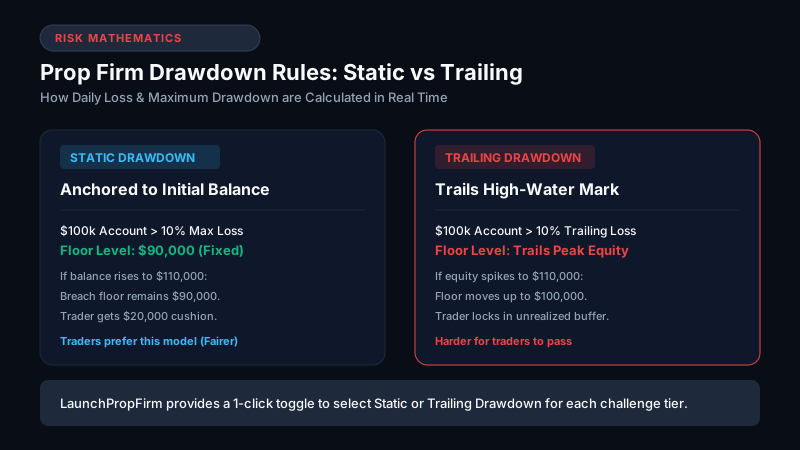
Static drawdown measures from the starting balance, always. A 10% static drawdown on a $25,000 account means the account closes if the balance drops below $22,500. This number never changes regardless of profits made.
Trailing drawdown measures from the highest balance the account ever reached. If a trader starts with $25,000, makes $2,000 profit, and now has $27,000, a 10% trailing drawdown means the account closes if the balance drops below $24,300. The floor moves up as profits increase.
Trailing drawdown is harder for traders and generates more breaches. Static drawdown is more trader-friendly and tends to produce better word of mouth.
I recommend starting with static drawdown. Add trailing as an option later if your pass rate is too high.
Skip the monthly fees
Own your prop firm platform outright. One time purchase.
Full source code. Live in 7 days. No revenue share. No monthly SaaS bill. See the exact platform before paying anything.
Demo login: haris / asdf1122. No signup needed
Standard Settings
Most prop firms in 2026 use:
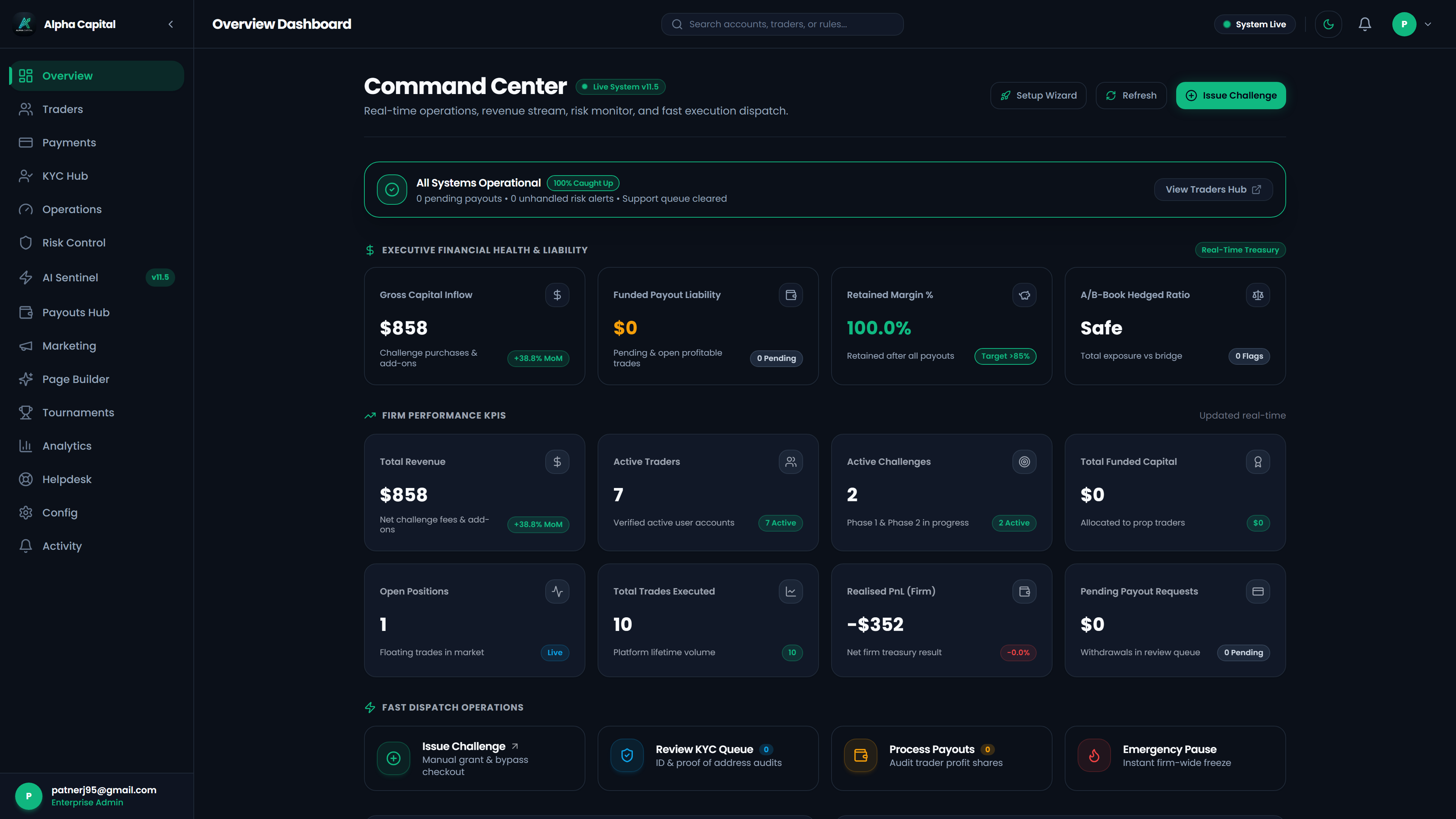
Centralized risk engine calculating floating equity, daily drawdown limits, and automated breach locks in real time.
Maximum drawdown: 10% from starting balance (static)
Daily loss limit: 5% of starting balance
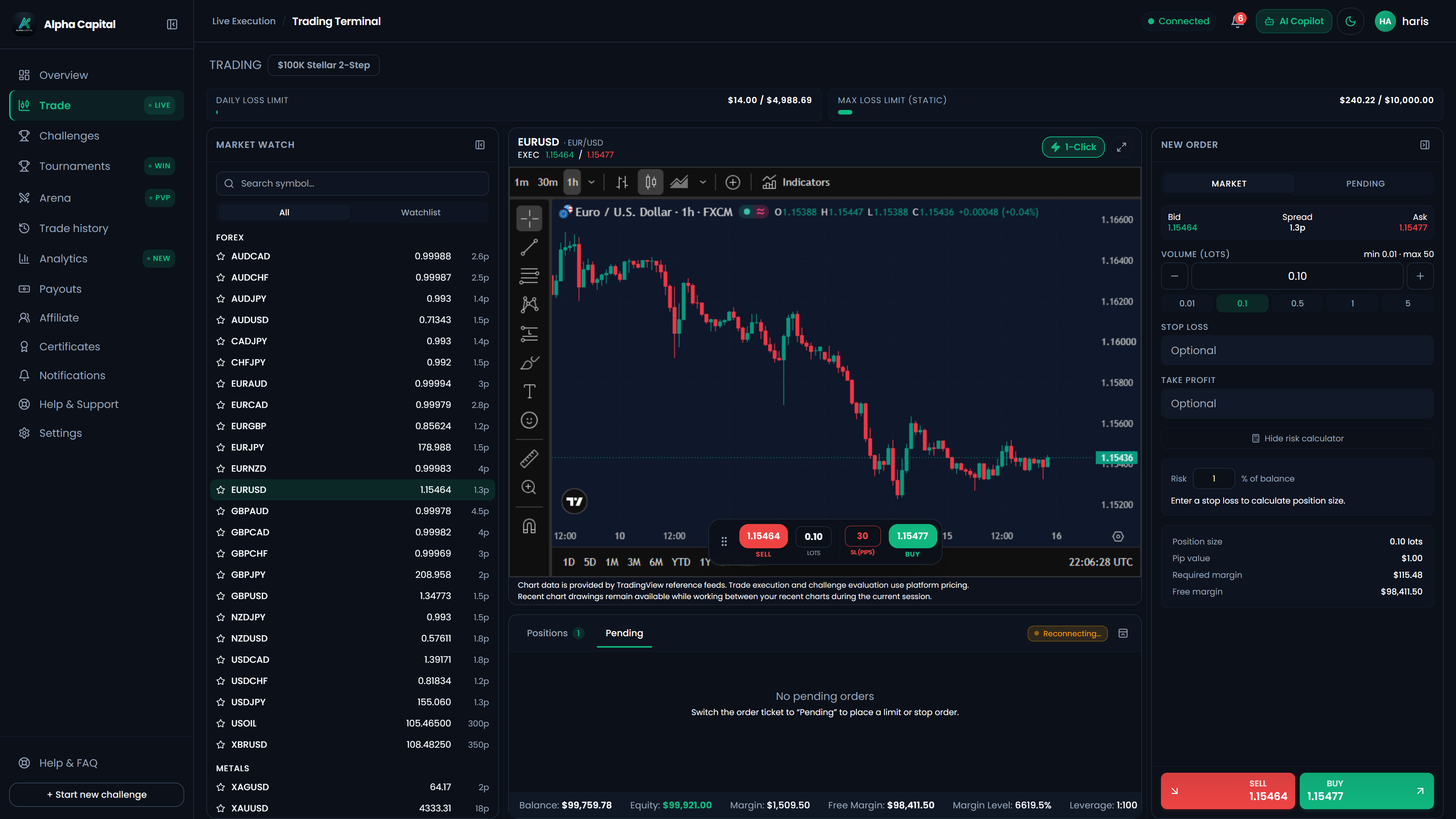
The daily loss limit is a separate rule. It stops a trader from losing their entire drawdown buffer in one bad session. Without it, a trader could blow through 10% in a single day and breach immediately. With a 5% daily limit, they have to manage their sessions, not just their overall balance.
These two rules together create the standard evaluation framework that traders recognize and expect.
How to Adjust Based on Your Goals
If your pass rate is above 15%, your rules are too easy. Tighten by either reducing the profit target or switching to trailing drawdown.
If your rebuy rate drops below 25%, traders feel the rules are unfair. Loosen by increasing the daily loss limit from 5% to 6% or 7%.
If traders are complaining about the daily reset time, clarify in your terms whether the daily limit resets at midnight server time or at the start of each calendar day in your timezone.
The Operator Perspective
Every trader who breaches a drawdown rule is a potential rebuy. My data shows that traders who breach in Phase 1 rebuy at roughly 35% rate. Traders who breach in Phase 2 rebuy at roughly 45% rate. they were close, they feel it.
This means drawdown rules are not just a risk filter. They are also a revenue mechanism. Rules that are fair but firm create motivated traders who try again.
Rules that feel arbitrary or unfair create traders who leave and post negative reviews.
Quick Reference
| Rule | Standard Setting | Effect If Tighter | Effect If Looser |
|---|---|---|---|
| Max drawdown | 10% static | Fewer pass, more rebuys | More pass, more payouts |
| Daily loss limit | 5% | Harder daily management | More breathing room |
| Trailing vs static | Static | N/A | Trailing is harder |
All of these are configurable from your admin panel. No code changes required.
See the full platform including admin drawdown controls
Risk Warning: Drawdown rule design is the most impactful decision an operator makes. Rules that are too loose produce a high pass rate, which increases payout liability beyond what challenge fee revenue can cover. Rules that are too strict produce a low pass rate but damage your reputation with traders. The industry standard range exists for a reason.
Frequently Asked Questions
What is the difference between static and trailing drawdown?
Static drawdown is fixed from the initial balance. A $100,000 account with 10% static drawdown cannot drop below $90,000 regardless of how much profit the trader makes. Trailing drawdown adjusts the floor upward as profits grow, making it harder to game with early large gains.
Which drawdown type do most prop firms use?
Both are common. Static drawdown is simpler and easier for traders to understand. Trailing drawdown rewards consistent growth and is harder for traders to exploit by locking in early profits. Operators should choose based on the trader behavior they want to incentivize.
How does daily loss limit work alongside max drawdown?
Daily loss limit is a separate rule from max drawdown. It prevents a trader from losing more than a set percentage (typically 5%) in a single trading day. Breaching either the daily limit or the max drawdown ends the challenge. Both limits are configured independently in the admin panel.
What drawdown level causes the most trader disputes?
Trailing drawdown at tight levels produces the most disputes because traders sometimes misunderstand how it adjusts. Publishing a clear drawdown calculation example in your challenge rules, with a worked numeric example, reduces disputes significantly.
Can operators change drawdown rules after a trader starts a challenge?
No. Rules must apply as stated at the time of purchase. Retroactively changing drawdown rules mid-challenge is the most common cause of fraud accusations against prop firms. Your platform should lock challenge parameters at purchase time.
Calculate Prop Firm Drawdown & Daily Stop Floors
Verify your exact liquidation level, remaining daily loss buffer, and maximum safe position sizes before taking your next trade.
Prop Firm Monthly Profit Simulator
Simulate your challenge revenue, payout liability, and net monthly take-home profit.
$20,000
From upfront challenge fees-$2,800
~10 funded payouts budgeted$0 / month
Saves $3,000/mo vs SaaS$17,200/mo
Run-rate: $206,400/yr
M.Haris
Founder & Platform ArchitectBuilding open prop trading software infrastructure for operators worldwide
I built LaunchPropFirm to give forex educators, trading communities, and fintech operators complete ownership of their platform with full source code and zero monthly SaaS rent. Every article on this blog is drawn from hands-on platform development, live MT5 risk bridge mechanics, and real operator economics.
All content, financial models, ROI estimates, and architecture guides on LaunchPropFirm are published strictly for educational and informational purposes. LaunchPropFirm provides institutional prop trading software and technology infrastructure; it does not operate as a broker, custodian, or registered investment advisor.
Evaluation challenges and funded trader accounts referenced in this guide operate in simulated demo trading environments using real-time market data feeds. Simulated trading results do not represent actual trading performance or financial advice.
Recommended Next Reads
Hand-picked operator guides to scale your prop trading platform.
Wise Prop Firms: Payouts, Risks and Rails
Explore why direct Wise prop firms payouts trigger account freezes, how Rise compliance bridges protect funds, and why multi-rail payouts guarantee cash flow.
Prop Firm Capital: Requirements, Reserve Buffers and Risk Architecture
Unpack the financial reality of prop firm capital: synthetic exposure vs liquid reserves, challenge fee pool economics, A-Book STP hedging, and exact startup blueprints.
Skip the monthly fees
Own your prop firm platform outright. One time purchase.
Full source code. Live in 7 days. No revenue share. No monthly SaaS bill. See the exact platform before paying anything.
Demo login: haris / asdf1122. No signup needed