Prop Trading Firm Business Model: Cash Flow Architecture
The institutional prop trading firm business model explained. Examine B-Book cash flow mechanics, risk pooling, regulatory frameworks, and enterprise valuation.
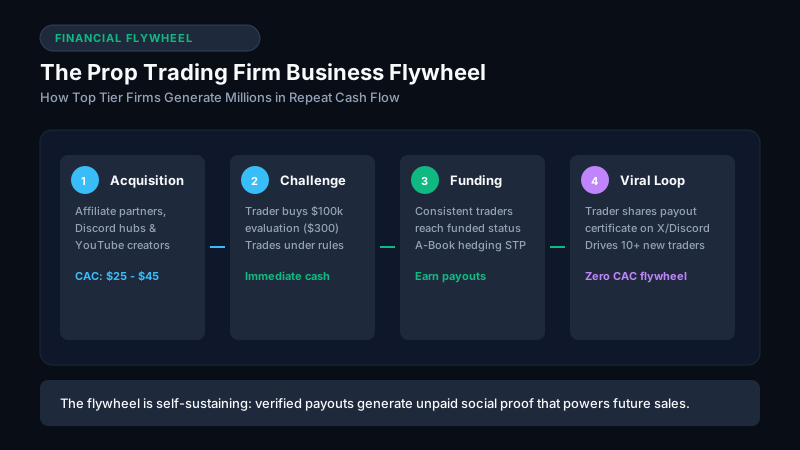
Why This Model Works
I spent six months studying prop firm business models before building LaunchPropFirm. The funded trader evaluation model is one of the most elegant business structures in financial services.
High margins. Predictable revenue. No trading risk.
Scales with marketing spend. Here is the complete breakdown.
The Core Mechanism
A prop trading firm in the funded trader model operates on a simple principle.
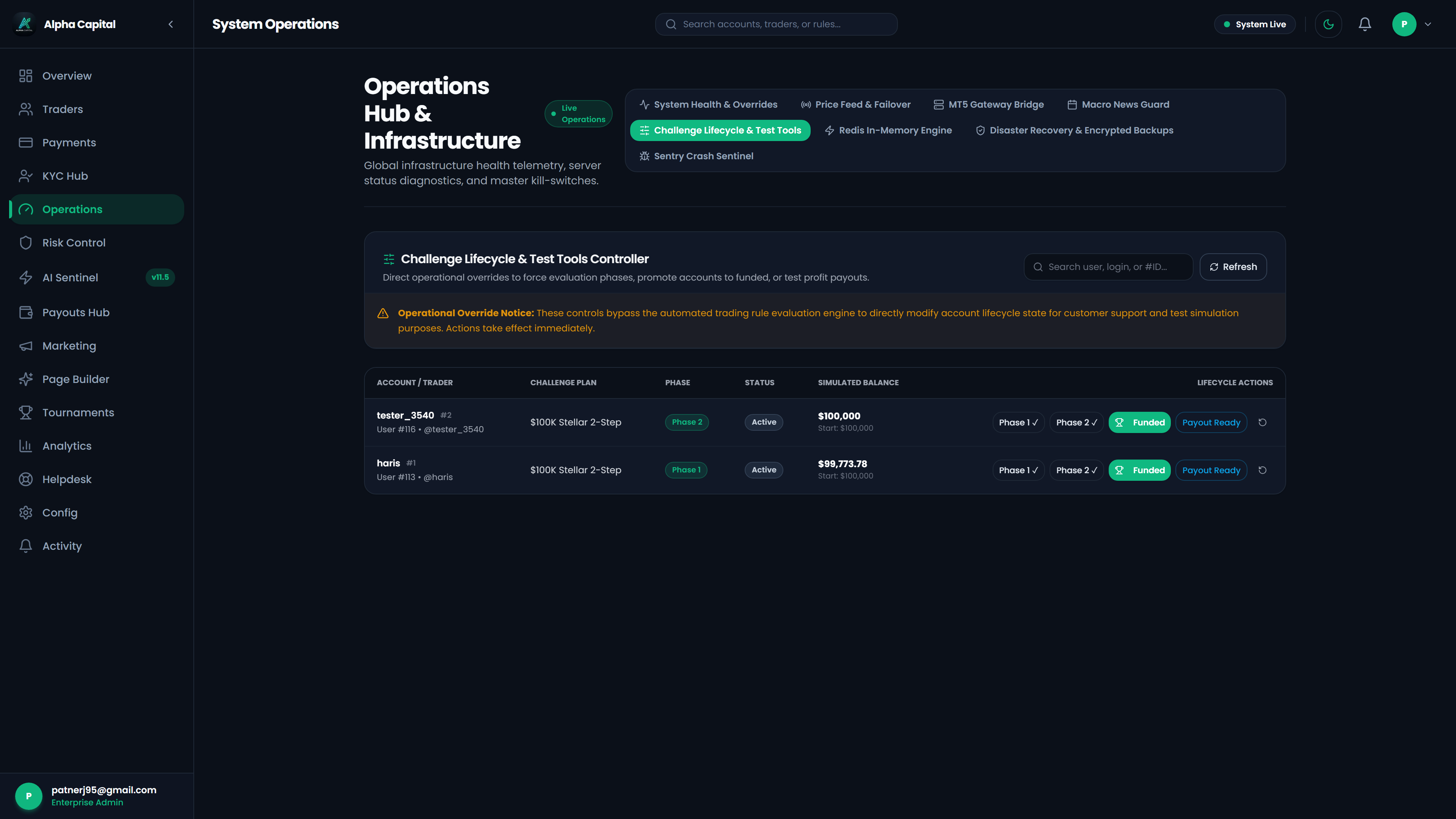
Turnkey deployment setup wizard enabling rapid 7-day prop firm launch with pre-configured risk templates.
Traders pay to be evaluated. Most fail. The firm keeps their fees. The minority who pass trade a funded account and share profits with the firm.
This is not predatory. Traders know the rules before they pay. The challenge exists to filter consistent traders from gamblers. The business model works because markets are genuinely hard and consistent profitability is rare.
Revenue Streams
Challenge fees are the primary revenue. A trader pays $49 to $650 depending on account size. At a 5 to 10% combined pass rate across two phases, 90 to 95 traders out of 100 pay and do not pass. Their fees are pure revenue.
Rebuy fees are the second stream. A trader who fails in Phase 2 after weeks of work is highly motivated to try again. Rebuy rates of 30 to 50% from Phase 2 failures are common. Each rebuy is full price.
Profit splits are the third stream. Funded traders who earn profits share 20% with the firm. This is the smallest revenue stream but the most talked-about one.
Scale payments and upgrades are a fourth stream. Some firms charge to scale a funded account from $25,000 to $50,000. Others charge monthly account fees.
Skip the monthly fees
Own your prop firm platform outright. One time purchase.
Full source code. Live in 7 days. No revenue share. No monthly SaaS bill. See the exact platform before paying anything.
Demo login: haris / asdf1122. No signup needed
Cost Structure
Platform costs are the largest fixed cost. On SaaS this runs $1,000 to $5,000 per month. On a one time license like LaunchPropFirm, it is $70 per month in hosting and price feed after the initial purchase.
Payout reserves are the largest variable cost. Every funded trader creates a payout liability. Standard practice is to reserve 25 to 30% of all challenge fee revenue.
This reserve is not spent. It is held to cover funded trader profit withdrawals as they are earned.
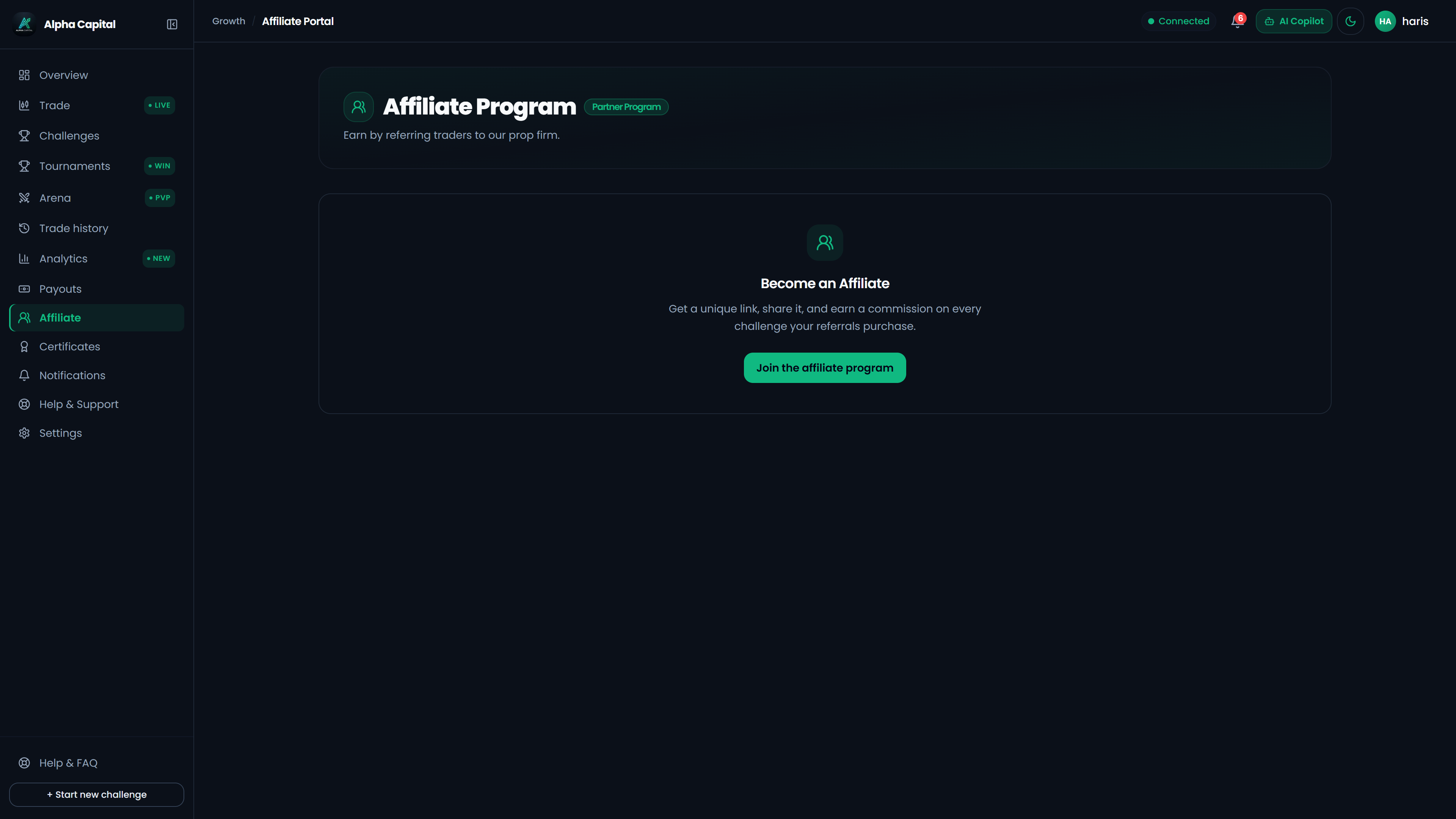
Affiliate commissions run 15 to 25% of challenge fees for sales generated through partners. This reduces margin but increases volume.
Payment processing fees run 2.9% to 3.5% of card transactions. Crypto payments cost under $1 per transaction.
Margin Analysis
Margin analysis depends heavily on whether a firm routes trades to market or runs a synthetic evaluation book. For a complete look at order flow routing and margin risk, review our guide on A-Book vs B-Book prop firm execution.
At small scale (30 challenges per month):
Revenue: $5,970
Payout reserve: $1,492
Platform and running costs: $70
Net margin before affiliate commissions: ~74%
At medium scale (100 challenges per month):
Revenue: $19,900
Payout reserve: $4,975
Affiliate commissions (50% of sales): $1,990
Platform and running costs: $70
Net margin: ~65%
At large scale (300 challenges per month):
Revenue: $59,700
Payout reserve: $14,925
Affiliate commissions (60% of sales): $7,164
Support costs: $1,000
Platform and running costs: $70
Net margin: ~61%
Funded trader payouts reduce these by 5 to 15 percentage points depending on pass rates. Final net margins of 45 to 60% are realistic for a well-run firm.
What Determines Success
Distribution is everything. A prop firm with the best platform and zero marketing generates zero revenue.
The firms that scale quickly all have the same thing: an existing audience of traders who trust them.
Forex educators. Signal providers. YouTube channels. Discord servers.
The challenge fee is a low-friction product for someone who already trusts you. $199 to get evaluated by someone whose trading content they have followed for months is an easy decision.
Why the Model Survives Market Downturns
Challenge fee revenue does not depend on market direction. Traders buy challenges in bull markets and bear markets. The evaluation fee is charged before any trading happens.
Payout exposure can increase in trending markets when more traders hit profit targets. But challenge fee revenue tends to spike in volatile markets when more traders are active.
The business has natural hedges that most financial services do not.
The Platform Is Not the Moat
I want to be direct about this. The technology is a commodity. LaunchPropFirm is $2,500. Several competitors offer similar platforms.
The moat is your trader community, your reputation for paying out, and your marketing reach. Those take time to build. The platform takes a week.
Operator Tip: The funded evaluation business model is a volume business. Margin is high, but absolute income scales with challenge volume. Operators who focus on building repeatable traffic sources (affiliates, content, community) rather than one-off marketing campaigns build businesses that compound. A platform that runs itself while you market is the goal.
Frequently Asked Questions
How does the funded trader evaluation model generate revenue?
Traders pay a challenge fee to be evaluated on a simulated account. If they fail (90 to 95% do), the fee is revenue. If they pass, they receive a funded account and the operator pays a share of live trading profits. Challenge fee revenue from failed traders is the primary income source.
What is the break-even math for a prop firm?
At $200 average challenge fee and 25 monthly sales, gross revenue is $5,000. After setting aside 25% for payout reserves ($1,250) and covering hosting/data costs ($100), net income is approximately $3,650. Break-even on a $4,500 platform cost occurs after 2 months at this volume.
What makes the funded evaluation model sustainable long-term?
The 5 to 10% pass rate creates a predictable relationship between challenge fee revenue and payout liability. Rebuy rates (failed traders buying again) provide recurring revenue without additional marketing cost. Funded trader referrals provide organic growth. These three mechanisms together create a sustainable base.
What are the structural failure points in this business model?
Payout reserve mismanagement (spending reserves as profit) and misleading marketing (implying real capital accounts) are the two most common failure causes. The model itself is sound. Execution discipline around these two areas determines survival.
How does the business model differ from a broker or investment fund?
Brokers and investment funds manage real client capital in live markets. The funded evaluation model operates on simulated accounts with live pricing. Revenue comes from service fees (challenge fees), not from trading profits or client asset management. The regulatory treatment is entirely different.
Model Your Firm's Monthly Cash Flow & Profit
Simulate challenger intake, pass rate payout reserves, and net operator margins with our free real-time economic calculator.
Prop Firm Monthly Profit Simulator
Simulate your challenge revenue, payout liability, and net monthly take-home profit.
$20,000
From upfront challenge fees-$2,800
~10 funded payouts budgeted$0 / month
Saves $3,000/mo vs SaaS$17,200/mo
Run-rate: $206,400/yr
M.Haris
Founder & Platform ArchitectBuilding open prop trading software infrastructure for operators worldwide
I built LaunchPropFirm to give forex educators, trading communities, and fintech operators complete ownership of their platform with full source code and zero monthly SaaS rent. Every article on this blog is drawn from hands-on platform development, live MT5 risk bridge mechanics, and real operator economics.
All content, financial models, ROI estimates, and architecture guides on LaunchPropFirm are published strictly for educational and informational purposes. LaunchPropFirm provides institutional prop trading software and technology infrastructure; it does not operate as a broker, custodian, or registered investment advisor.
Evaluation challenges and funded trader accounts referenced in this guide operate in simulated demo trading environments using real-time market data feeds. Simulated trading results do not represent actual trading performance or financial advice.
Recommended Next Reads
Hand-picked operator guides to scale your prop trading platform.
Prop Firm Profit Split: How to Set It
Most prop firms offer 70-90% profit splits. Here is how the split works, what the market standard is in 2026, and how to set yours without hurting margins.
Prop Firm Liquidity Providers: Prime of Prime Directory
Compare the top prop firm liquidity providers and Prime of Prime brokers. Review FIX 4.4 API bridge latency, margin rules, crypto rails, and fee structures.
Skip the monthly fees
Own your prop firm platform outright. One time purchase.
Full source code. Live in 7 days. No revenue share. No monthly SaaS bill. See the exact platform before paying anything.
Demo login: haris / asdf1122. No signup needed