Start a Prop Firm with No Money: Bootstrapping Playbook
Launch a funded trader brand on a shoestring budget. Learn how to bootstrap a prop firm, secure backing, negotiate zero-upfront setups, and scale fast.
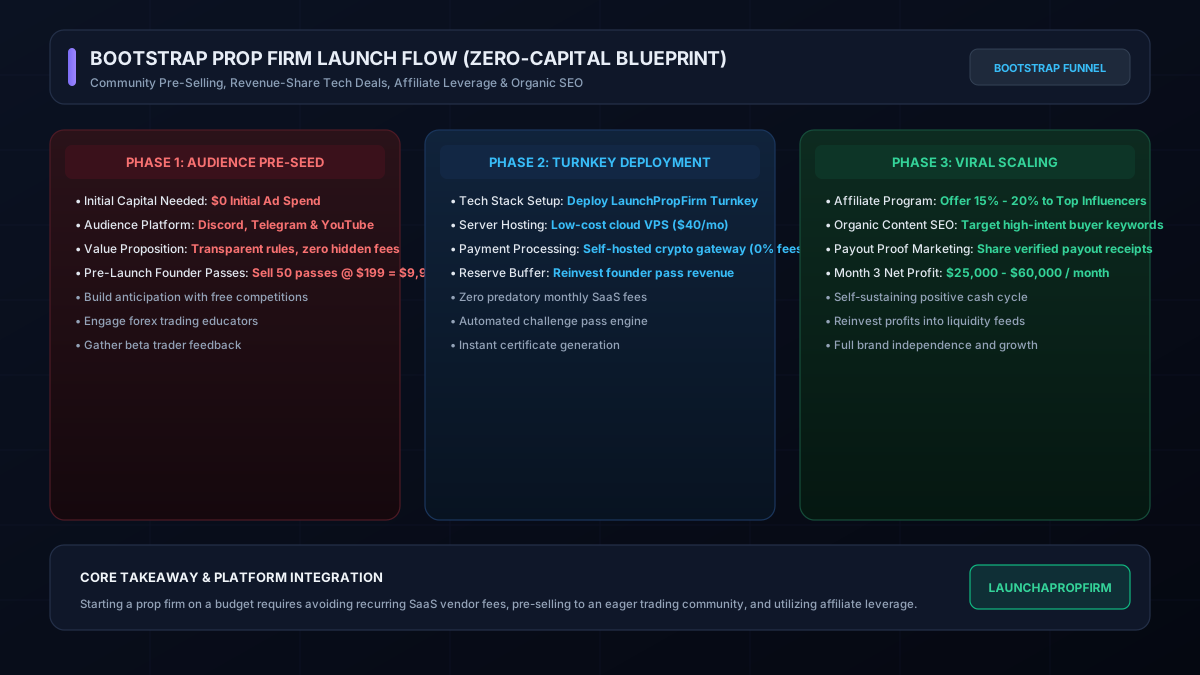
The Question Everyone Asks First
I started LaunchPropFirm with less than $5,000. Here is exactly how the math works.
Can I start a prop firm without a lot of money?
The honest answer is yes. Not zero dollars. But far less than most people assume.
I am going to break down the actual minimum, what you genuinely need on day one versus what you can add later, and where people waste money they did not need to spend.
See the platform before reading further
What "Starting a Prop Firm" Actually Costs
The reason people think this is expensive is that they are imagining the wrong kind of prop firm.
A full institutional prop firm with live capital, licensed brokers, compliance departments, and proprietary trading desks costs millions. That is not what the funded trader model is.
The funded trader model is simpler. You sell evaluation challenges. Traders pay a fee, trade a demo account under your rules, and if they pass, they get a funded account where they share profits with you. The firm makes money primarily from challenge fees, not from actual trading capital at risk.
That changes the math completely.
The Real Minimum Budget
Here is what you actually need to launch.
| Item | Cost |
|---|---|
| White label platform (one time) | $2,495 |
| VPS hosting for first year | $180 |
| MT5 live price feed for first year | $480 |
| Domain name | $12 |
| Total | $3,172 |
That is it. Under $3,200 to launch a functional prop firm with a real trading terminal, challenge system, payment processing, and admin panel.
The ongoing cost after that is under $70 per month. Hosting and price feed. Nothing else.
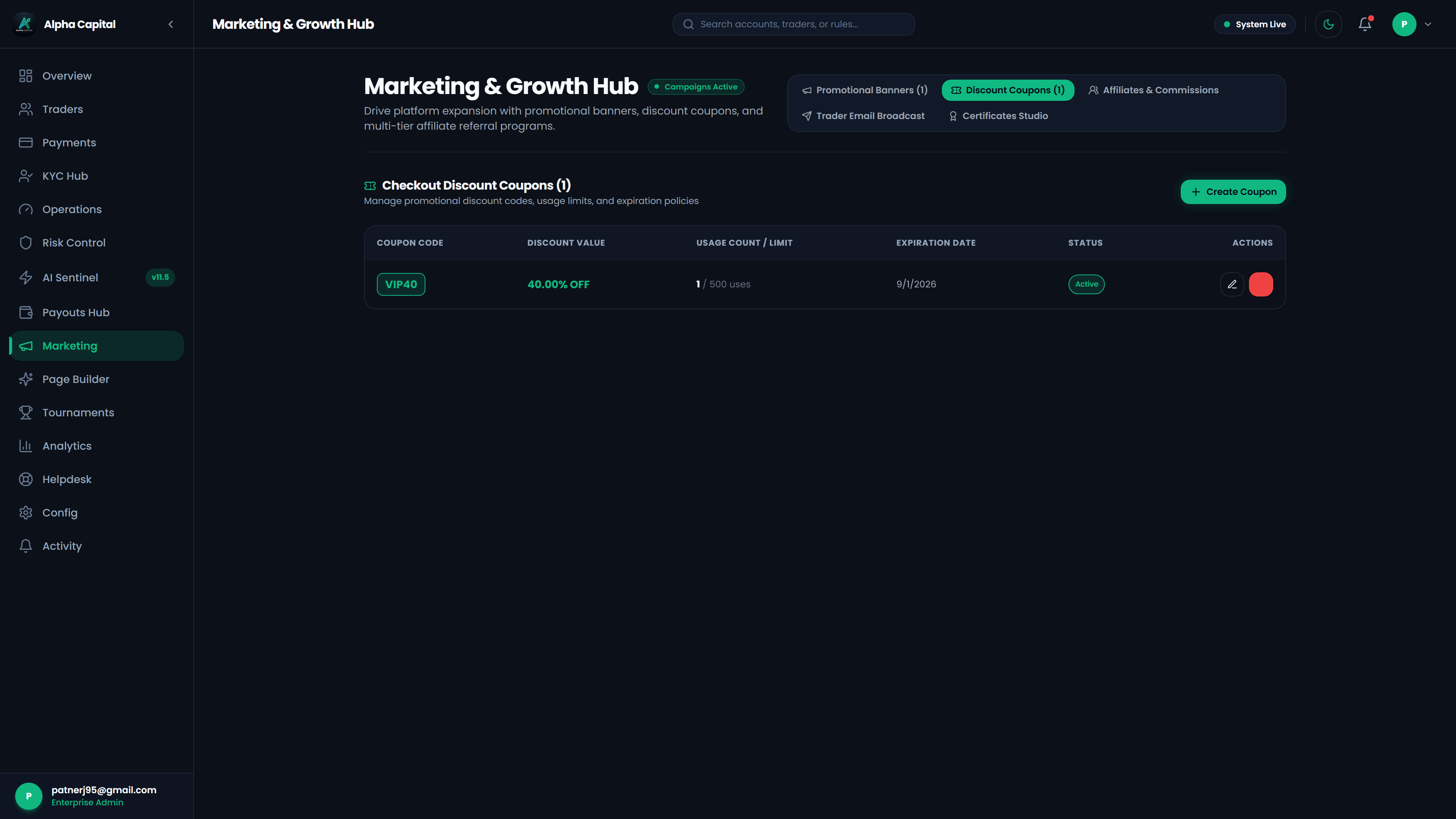
Skip the monthly fees
Own your prop firm platform outright. One time purchase.
Full source code. Live in 7 days. No revenue share. No monthly SaaS bill. See the exact platform before paying anything.
Demo login: haris / asdf1122. No signup needed
What You Do Not Need at Launch
Most people add costs that are completely unnecessary in the first few months.
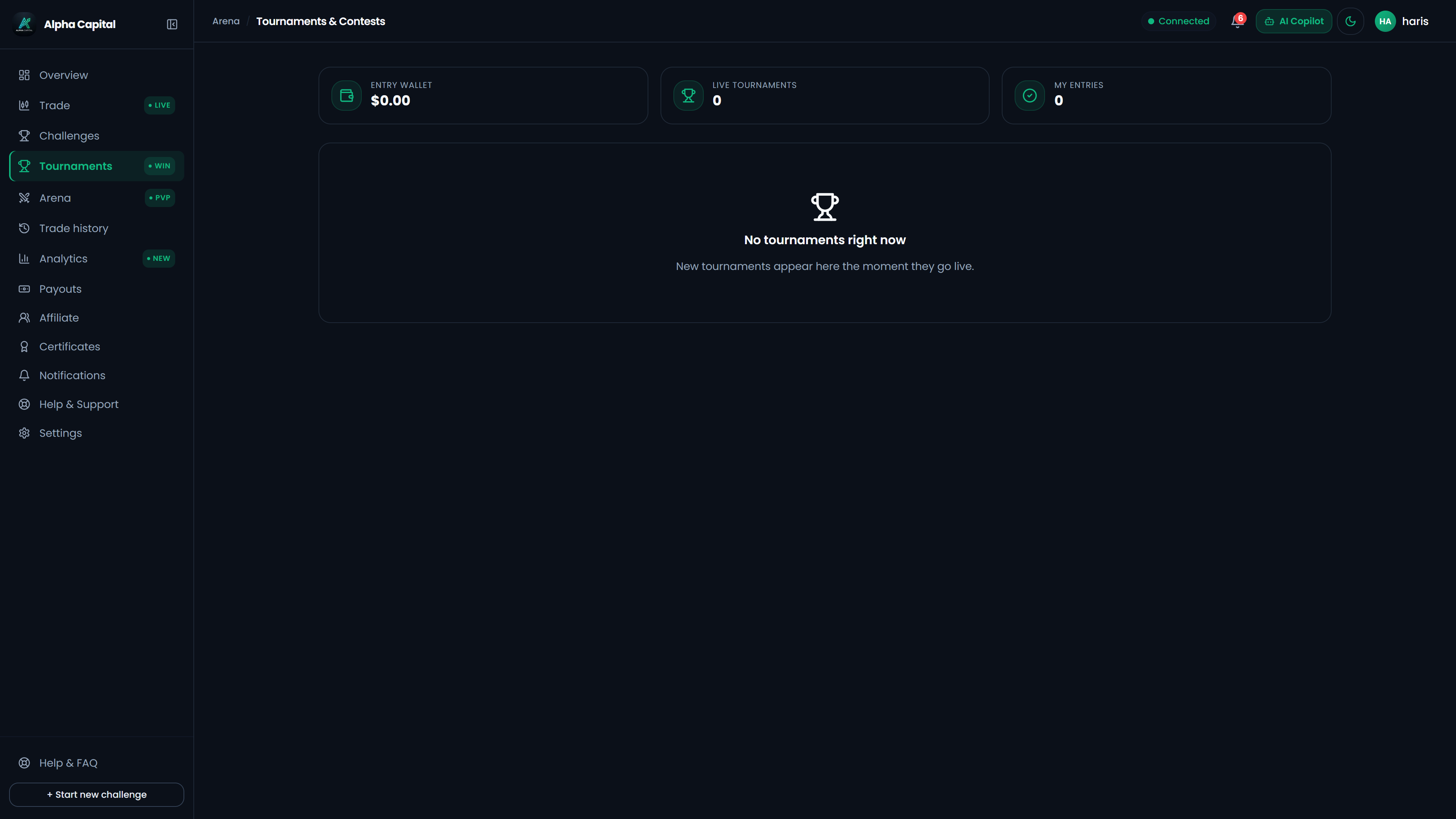
Affiliate tracking portal empowering traders and influencers to earn recurring commissions promoting your firm.
You do not need a KYC system. Manual identity verification works fine at small scale. When you have hundreds of funded accounts, automate it. On day one, check documents yourself.
You do not need a CRM. A spreadsheet tracks your traders perfectly at launch. Add a proper CRM when you are managing 50 plus accounts.
You do not need paid ads. Your first sales come from your existing network, your community, or direct outreach. Paid ads for financial products have restrictions anyway.
You do not need a legal team upfront. Read up on your jurisdiction yourself. Most prop firms in 2026 operate without specific licenses because they are using simulated accounts, not live capital. This varies by country, so do your own research.
You do not need a custom built platform. That costs $150,000 to $500,000 and takes 18 months. A white label platform gives you everything you need from day one.
The Payout Reserve Question
Here is where people get into trouble.
The platform itself is cheap. But you also need a payout reserve. This is money you set aside to pay funded traders who earn profits.
For a starting firm, I recommend having $1,500 to $2,000 set aside as a float before you launch. This is not spending money. It is reserved money that you only use to pay out profits to funded traders.
The reason you can keep this number low at launch is that very few traders will pass your challenge in the first 30 to 60 days. Phase 1 takes time. Phase 2 takes more time. By the time your first funded trader requests a payout, you will have collected multiple challenge fees to cover it.
Build your reserve from your first challenge sales. Take 25% of every challenge fee and set it aside immediately. By the time payouts start coming in, you have a healthy float.
The Cheapest Way to Actually Launch
If you want to spend as little as possible, here is the exact path.
Buy the platform. Get the cheapest VPS that handles your initial load. Connect Stripe for card payments and USDT TRC20 for crypto. TRC20 transaction fees are under $1 so your international traders can pay without large fees eating into their purchase.
Set up three challenge plans to start. A small account, a medium account, and a large account. Price them below the market rate initially to attract your first traders.
Tell your existing network. You do not need an audience of 50,000 people. If you know 20 active traders personally, some of them will try your challenge. Their word of mouth reaches people you do not know.
That is the entire launch strategy for someone starting with minimum capital.
Month One Revenue vs Payout Liability
Here is what the first month looks like at small scale.
Say 10 traders buy your $199 challenge in month one. That is $1,990 in revenue.
Set aside 25% as payout reserve. That is $497.50. Your remaining revenue covers your platform costs and hosting entirely with room left over.
In month one, almost nobody passes Phase 2 yet. Your payout liability is near zero. You are collecting fees with minimal obligation.
Month two, some traders from month one start finishing Phase 1. A few enter Phase 2. Your challenge sales continue. The business starts compounding.
Zero-Capital Launch vs No-Challenge / Instant Funding Models
When structuring how to start a prop firm with no money, bootstrap operators frequently compare standard 2-step evaluations against no-challenge instant funding setups. While instant funding programs command higher ticket prices from retail traders, they introduce distinct treasury obligations that affect early cash flow.
A standard evaluation model creates an operational buffer for an undercapitalized founder. Traders spend 30 to 60 days completing Phase 1 and Phase 2. During this window, 85% to 92% of evaluation attempts breach drawdown rules, allowing the operator to build a liquid payout reserve from challenge fees before paying out winning traders.
In contrast, no-challenge prop firms grant immediate simulated funded access upon checkout. Winning traders can request profit withdrawals within 14 to 30 days. This compressed payout horizon requires a larger treasury float on day one.
| Model Characteristic | Standard 2-Step Evaluation | No-Challenge Instant Funding |
|---|---|---|
| Upfront Trader Price | $32 to $199 one-time | $120 to $599 or monthly subscription |
| First Payout Horizon | 30 to 60 days after Phase 2 | 14 to 30 days after first trade |
| Minimum Operator Float | $500 to $1,500 reserve | $3,500 to $7,000 reserve |
| Historical Washout Rate | 85% to 92% across phases | 70% to 80% on live trailing stop |
| Working Capital Risk | Low (fees fund reserve first) | Medium to High (early payout exposure) |
How to Get Started with No-Challenge Prop Firms
Traders researching how to get started with no-challenge prop firms want immediate simulated funded accounts without passing 30-day evaluation phases. They pay higher upfront tickets ($120 to $599) to begin trading for real profit splits immediately. However, most retail traders fail these accounts quickly because instant funding models enforce strict trailing drawdown locks and 30% consistency rules.
For founders exploring how to get started with no-challenge prop firms on a bootstrap budget, defensive risk parameters are mandatory. Without an evaluation test to filter unprofitable order flow, the platform settings must defend against toxic trading strategies.
Begin with tighter drawdown thresholds than evaluation models. Standard challenges allow 8% to 10% total drawdown. Instant funding accounts should cap maximum loss at 4% to 6% trailing from the high-water mark, with a 2% to 3% daily limit.
Enforce mandatory consistency and news trading limits in the admin risk settings. Require that no single trading day accounts for more than 30% to 40% of total requested profit, preventing one-shot lottery trades from draining liquidity.
Configure payout tiers that scale with tenure. Offer a 50% profit split on the first monthly payout, increasing to 70% on month two and 80% on subsequent cycles. This schedule rewards disciplined consistency while preserving capital during the critical early operating months.
For operators with under $3,500 in total starting capital, launch with 2-step challenges first. Once accumulated challenge revenues generate a stable $5,000 cash reserve, introduce an instant funding tier as a premium upsell to capture traders who refuse to take evaluations.
What Actually Costs Money Later
Once you are running and generating revenue, there are real costs to plan for.
Payouts scale with your funded trader count. This is your main variable cost. Structure your challenge rules correctly and this stays manageable.
Customer support takes time. When you have 50 active challengers, questions come in. Budget time, not money, for this at small scale.
Marketing costs money when you are ready to scale past your personal network. Affiliates who drive traffic take 15% to 20% per sale. That is a cost only when you are generating sales through them.
Payment processing fees are small but real. Stripe charges around 3% per transaction. On $199, that is about $6.
The Mindset Shift
Starting a prop firm with limited capital requires you to think about sequencing.
Do not wait until you have $50,000 saved. The model generates cash from day one. Use the first month of challenge fees to fund the second month's marketing. Let the business self fund its growth.
The platform cost is the only fixed investment. Everything after that is variable and scales with revenue.
People who wait until they have "enough money" are usually waiting for a number that keeps moving. The real question is whether you can afford the platform and three months of hosting. If yes, you can start.
See the platform and what is included
Risk Warning: Starting a prop firm with no capital is possible on the platform side but not on the payout side. An operator who collects challenge fees but has no reserve when the first trader gets funded will face an immediate cash flow crisis. Delay launch until you have at least $500 to $1,000 set aside specifically for payouts.
Frequently Asked Questions
Can you actually start a prop firm with zero capital?
Not sustainably. The platform cost of $2,495 to $7,400 can be deferred by financing it through pre-launch challenge sales if you have an audience. But you need a payout reserve before your first trader gets funded. Zero capital means no reserve, which means you cannot pay your first funded trader.
How do operators finance the platform cost with no upfront money?
Some operators pre-sell challenges at a discount before launch, using the revenue to fund the platform purchase. Others partner with an investor who takes an equity stake. A few platforms offer payment plans. Pre-selling challenges works only if you have an existing audience to sell to.
What is the minimum amount needed to launch responsibly?
$1,500 to $2,500 covers a basic platform setup and provides an initial payout reserve. This assumes you handle branding with free tools (Canva) and use entry-level hosting. It is a tight budget but functional.
Can I use challenge fee revenue to build my payout reserve from day one?
Yes. This is the standard operating model. Set aside 25 to 30% of each challenge fee into a dedicated reserve account. Do not spend this as operating profit. Your reserve builds over the first 30 to 60 days and covers funded trader payouts from month 2 onward.
What should an operator with no capital do first?
Build an audience before spending anything on a platform. Every month you spend growing an email list, Discord server, or social media following is a month of free marketing infrastructure. When you launch, that audience converts into revenue that funds the platform and reserve simultaneously.
Evaluate Your Prop Firm Readiness Score (0-100)
Answer 5 quick operational questions about your acquisition channels, runway, and engine tech to get a personalized launch roadmap.
Prop Firm Monthly Profit Simulator
Simulate your challenge revenue, payout liability, and net monthly take-home profit.
$20,000
From upfront challenge fees-$2,800
~10 funded payouts budgeted$0 / month
Saves $3,000/mo vs SaaS$17,200/mo
Run-rate: $206,400/yr
M.Haris
Founder & Platform ArchitectBuilding open prop trading software infrastructure for operators worldwide
I built LaunchPropFirm to give forex educators, trading communities, and fintech operators complete ownership of their platform with full source code and zero monthly SaaS rent. Every article on this blog is drawn from hands-on platform development, live MT5 risk bridge mechanics, and real operator economics.
All content, financial models, ROI estimates, and architecture guides on LaunchPropFirm are published strictly for educational and informational purposes. LaunchPropFirm provides institutional prop trading software and technology infrastructure; it does not operate as a broker, custodian, or registered investment advisor.
Evaluation challenges and funded trader accounts referenced in this guide operate in simulated demo trading environments using real-time market data feeds. Simulated trading results do not represent actual trading performance or financial advice.
Recommended Next Reads
Hand-picked operator guides to scale your prop trading platform.
Instant Funding Prop Firm: Launch in 7 Days
Instant funding prop firms skip the challenge phase. Here is how to launch the model, protect your capital with hard risk limits, and go live in 7 days.
What Is a Prop Firm? Beginner's Guide & Overview
What is a proprietary trading firm? A beginner's guide explaining funded accounts, evaluation models, profit splits, and how retail prop firms operate in 2026.
Skip the monthly fees
Own your prop firm platform outright. One time purchase.
Full source code. Live in 7 days. No revenue share. No monthly SaaS bill. See the exact platform before paying anything.
Demo login: haris / asdf1122. No signup needed