What Is a Prop Firm? Beginner's Guide & Overview
What is a proprietary trading firm? A beginner's guide explaining funded accounts, evaluation models, profit splits, and how retail prop firms operate in 2026.
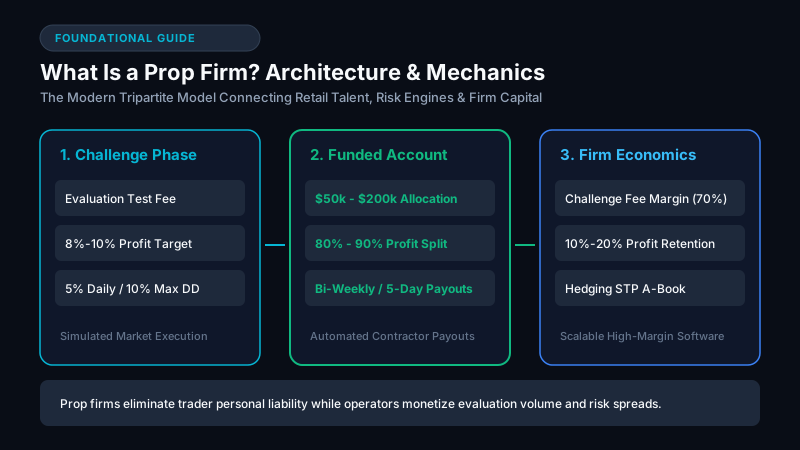
What Is a Prop Firm?
A prop firm, short for proprietary trading firm, gives traders access to a funded account after they pass a trading evaluation called a challenge. The trader uses the firm's capital (or simulated capital in most retail prop firms), keeps 70-90% of any profits, and the firm keeps the remainder as a profit split.
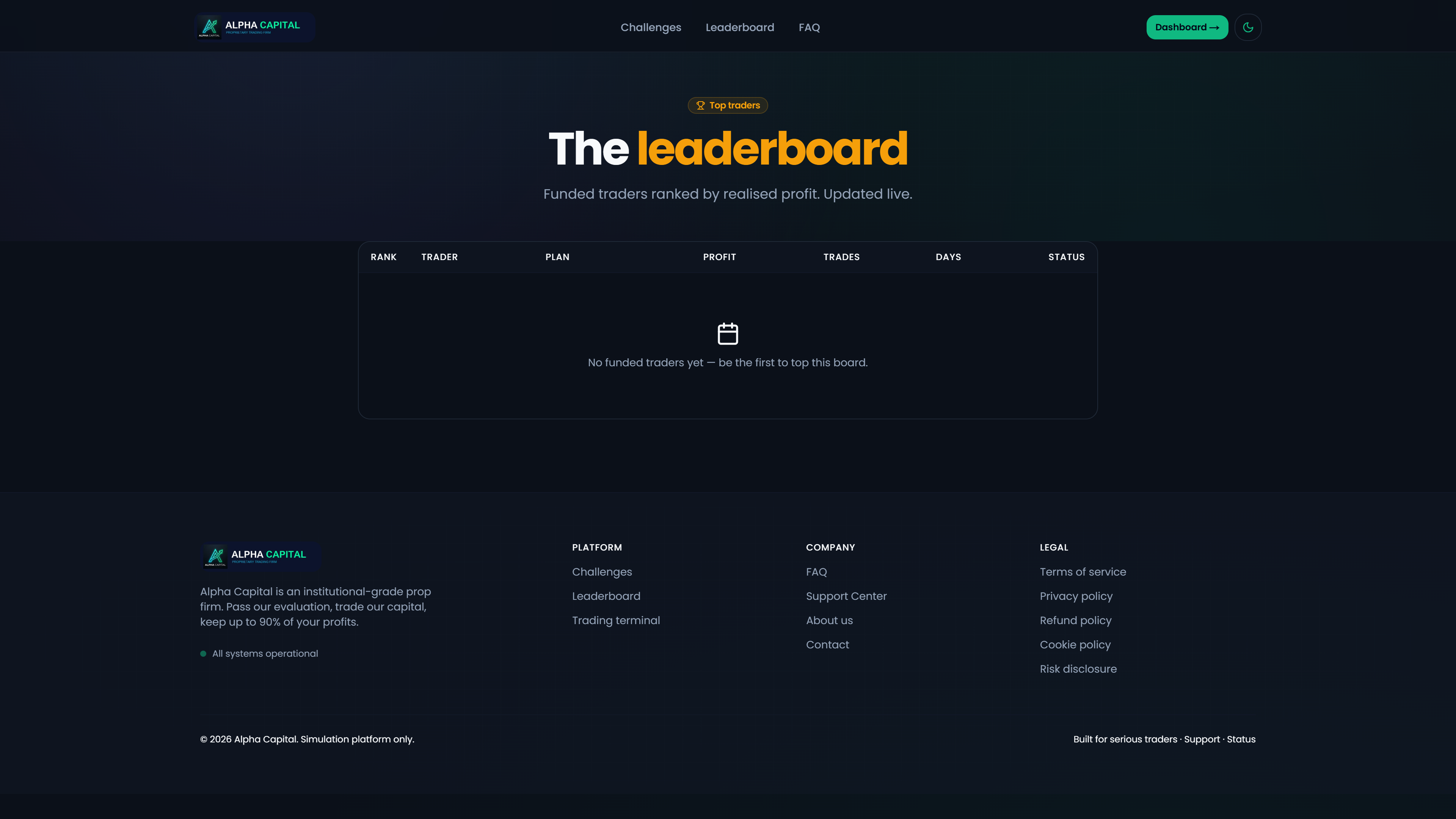
Integrated customer support desk resolving trader tickets, dispute inquiries, and account assistance requests.
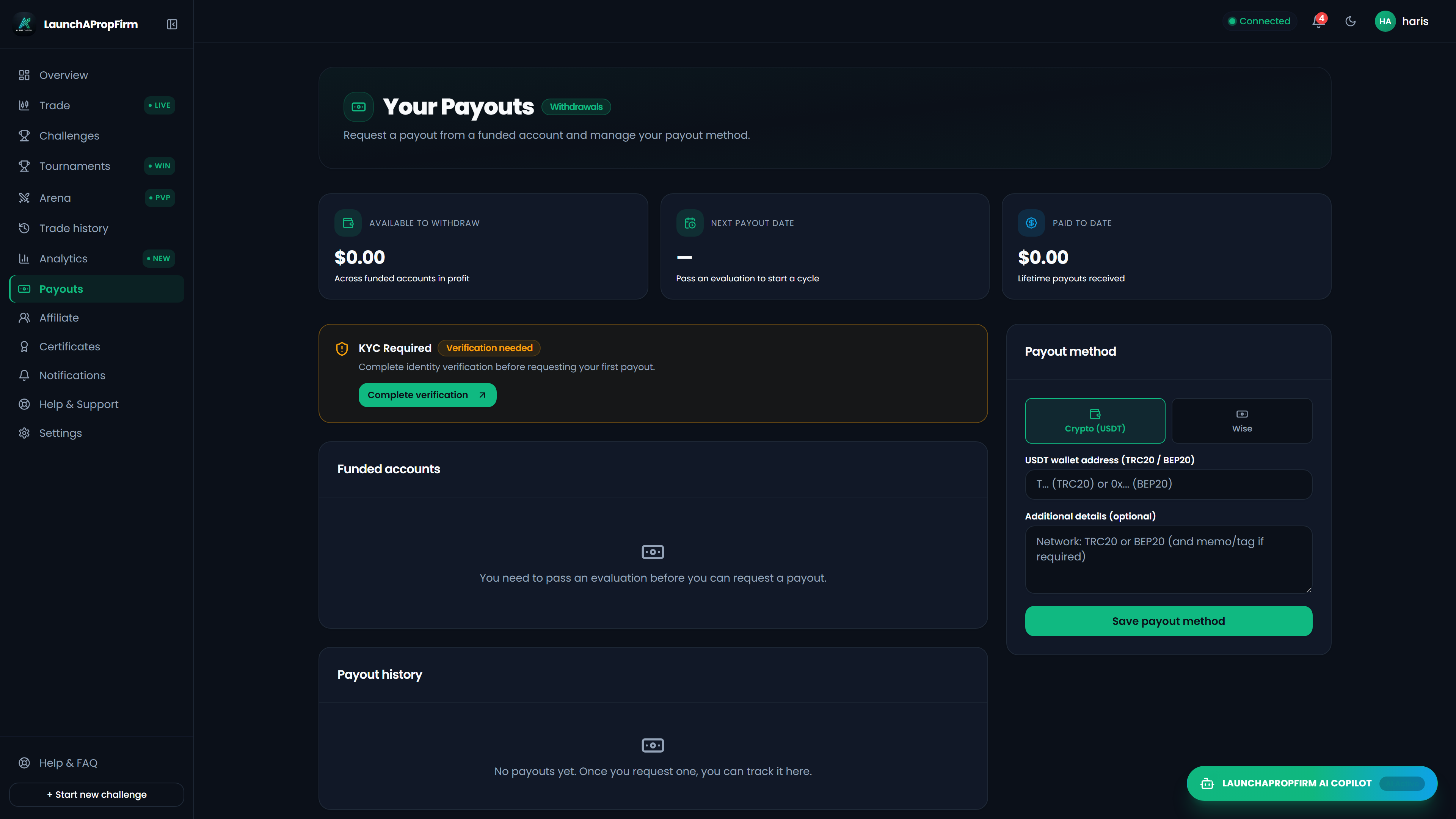
The trader does not risk their own money beyond the challenge fee. If they blow the funded account by violating drawdown rules, the firm absorbs the simulated loss and the trader must rebuy a challenge to try again.
That rebuy mechanic is the core of how most modern prop firms make money.
How a Prop Firm Evaluation Works
The standard model uses a two-phase challenge. Phase 1 is the evaluation: a trader buys access to a simulated account (typically $10,000 to $200,000) and must hit a profit target (usually 8-10%) without breaching daily or total drawdown limits (typically 5% daily, 10% total).
Phase 2 is the verification phase: same rules, lower profit target (usually 5%), same drawdown limits. It confirms the Phase 1 result was not luck.
After passing both phases, the trader gets a funded account. They trade live (or on a simulated account connected to real liquidity), generate profits, and request withdrawals on a set schedule, typically monthly or bi-weekly.
Most traders fail. Industry pass rates for two-phase challenges run between 5% and 15%, depending on account size and rules. That means 85-95% of challenge fees are pure revenue for the operator with zero payout obligation.
The Prop Firm Business Model
This is where it gets interesting from the operator side.
A prop firm's primary revenue is not profit splits from funded traders. It is challenge fees from traders who fail. A firm charging $299 for a $100,000 challenge that 90% of buyers fail collects $270 per buyer on average before ever paying out anything.
Here is how the revenue math looks at scale:
| Monthly Buyers | Challenge Fee | Pass Rate | Avg Revenue/Buyer | Monthly Revenue |
|---|---|---|---|---|
| 100 | $299 | 10% | $269 | $26,900 |
| 500 | $299 | 10% | $269 | $134,500 |
| 1,000 | $299 | 10% | $269 | $269,000 |
The funded trader payout comes from the 10% who pass. If funded traders generate $50,000 in simulated profits and you pay out 80%, you send $40,000 and keep $10,000. But that $40,000 payout is dwarfed by the $269,000 in challenge fee revenue from the same cohort.
The real risk is the rare trader who passes AND generates consistent profits on large accounts. Most prop firms manage this through drawdown rules tight enough that even skilled traders eventually breach them during normal market volatility.
Skip the monthly fees
Own your prop firm platform outright. One time purchase.
Full source code. Live in 7 days. No revenue share. No monthly SaaS bill. See the exact platform before paying anything.
Demo login: haris / asdf1122. No signup needed
What Makes a Prop Firm Different from a Broker or Hedge Fund
A broker executes trades on behalf of clients and earns commission on volume. A hedge fund pools investor capital and earns a management fee plus performance fee. A prop firm sells evaluation challenges to retail traders and pays out a portion of simulated profits.
The key distinction: most retail prop firms are not trading real client money. They are running a risk simulation business where the evaluation product (the challenge) is what generates revenue.
| Business Type | Revenue Source | Capital at Risk | Regulation |
|---|---|---|---|
| Prop Firm (retail) | Challenge fees | Simulated (mostly) | Low in most countries |
| Broker | Commissions/spread | Client deposits | High (FCA, ASIC, etc.) |
| Hedge Fund | Management + perf fees | Real investor capital | High |
| Funded Trader Program | Profit splits | Real capital at risk | Varies |
Some prop firms do use real capital on the back end through a connected broker. In these cases the funded trader's positions are partially hedged in live markets. LaunchPropFirm connects to MT5 brokers that allow this configuration.
What You Need to Start a Prop Firm
The barrier to starting a prop firm in 2026 is lower than most people expect. You do not need a brokerage license in most jurisdictions to run a prop firm evaluation business. You need four things.
A platform. Software that runs the challenge system, tracks trader accounts, enforces drawdown rules, generates certificates, and processes payouts. Building this from scratch costs $150,000 to $500,000. White-label options like LaunchPropFirm cost $2,495 to $7,400 one time.
A payment processor. Stripe works for card payments in most countries. You will also need a crypto option (USDT is standard) since a large portion of prop firm buyers prefer crypto. See the full breakdown in Prop Firm Payment Methods.
A website. A challenge page, pricing table, payout proof section, and FAQ minimum. Load speed and clear pricing are what move conversion rates. See Prop Firm Website 2026 for the full breakdown.
Trader acquisition. The single hardest part of running a prop firm is getting traders to your challenge page. Organic search, YouTube, affiliate programs, and Discord communities are the main channels. The affiliate model (paying 20-30% commission to partners who refer buyers) is how most prop firms scale acquisition. See Prop Firm Affiliate Program Guide.
What LaunchPropFirm Includes
LaunchPropFirm is a white-label prop firm platform built on Next.js with a full source code license. One time purchase, no monthly revenue share, no platform fees on your challenge sales.
The platform includes the two-phase challenge system, trader dashboard, leaderboard, certificate generator, affiliate system, payout center, CRM, and MT5 broker connection. You own the code and can modify anything.
Pricing starts at $2,500 for the Source Code plan (self-hosted, full codebase). The Launch Ready plan at $4,500 includes setup and hosting support. The Launch Partner plan at $7,400 includes a dedicated launch team.
Test the trader experience at demo.launchapropfirm.com or see full pricing at launchapropfirm.com.
Operator Tip: The first $50,000 in monthly challenge fee revenue is achievable with 150-200 monthly buyers at a $299 average fee. That requires roughly 3,000-5,000 monthly website visitors at a 5% conversion rate. Achievable with one active YouTube channel or a strong affiliate partner in the first 90 days.
FAQ
What is a prop firm in simple terms?
A prop firm pays traders to trade using the firm's capital after the trader passes a paid evaluation. The trader keeps most of the profits; the firm keeps a percentage as a profit split. Most prop firms make the bulk of their revenue from evaluation fees paid by traders who do not pass.
Do prop firms use real money?
It depends on the firm. Most retail prop firms use simulated accounts where no real capital changes hands. Some firms do hedge funded trader positions in live markets through a connected broker, but this is less common. When a firm pays out real money, that payout comes from the pool of challenge fees collected, not from actual trading gains.
Is starting a prop firm legal?
In most countries, running a prop firm evaluation business does not require a financial license because you are selling a performance evaluation service, not managing client investments. Regulations vary by country and are evolving. For a full breakdown, see Prop Firm License Requirements.
How much does it cost to start a prop firm?
With a white-label platform, the startup cost is $2,500 to $10,000 for software plus $500 to $2,000 for website, payment setup, and legal. Custom builds run $150,000 to $500,000. For more detail, see How Much Does It Cost to Start a Prop Firm.
How do prop firms make money if traders are profitable?
Challenge fees from failed attempts generate the majority of revenue. At a 10% pass rate, 90 out of 100 buyers pay the fee and receive nothing. The 10 who pass generate payout obligations, but those payouts are covered many times over by the fees from the 90 who failed. How Prop Firms Make Money covers the full revenue breakdown.
Evaluate Your Prop Firm Readiness Score (0-100)
Answer 5 quick operational questions about your acquisition channels, runway, and engine tech to get a personalized launch roadmap.
Prop Firm Monthly Profit Simulator
Simulate your challenge revenue, payout liability, and net monthly take-home profit.
$20,000
From upfront challenge fees-$2,800
~10 funded payouts budgeted$0 / month
Saves $3,000/mo vs SaaS$17,200/mo
Run-rate: $206,400/yr
M.Haris
Founder & Platform ArchitectBuilding open prop trading software infrastructure for operators worldwide
I built LaunchPropFirm to give forex educators, trading communities, and fintech operators complete ownership of their platform with full source code and zero monthly SaaS rent. Every article on this blog is drawn from hands-on platform development, live MT5 risk bridge mechanics, and real operator economics.
All content, financial models, ROI estimates, and architecture guides on LaunchPropFirm are published strictly for educational and informational purposes. LaunchPropFirm provides institutional prop trading software and technology infrastructure; it does not operate as a broker, custodian, or registered investment advisor.
Evaluation challenges and funded trader accounts referenced in this guide operate in simulated demo trading environments using real-time market data feeds. Simulated trading results do not represent actual trading performance or financial advice.
Recommended Next Reads
Hand-picked operator guides to scale your prop trading platform.
Instant Funding Prop Firm: Launch in 7 Days
Instant funding prop firms skip the challenge phase. Here is how to launch the model, protect your capital with hard risk limits, and go live in 7 days.
Prop Firm Business Plan: Real Numbers
Starting a prop firm needs a clear business plan. Here is the revenue model, startup cost breakdown, 12-month projection, and what to confirm before launch.
Skip the monthly fees
Own your prop firm platform outright. One time purchase.
Full source code. Live in 7 days. No revenue share. No monthly SaaS bill. See the exact platform before paying anything.
Demo login: haris / asdf1122. No signup needed