Prop Firm License Requirements 2026
Most prop firm operators run legally without a broker license. Here is what regulators actually focus on, what you need by country, and how to stay compliant.
The Question Every New Operator Asks
I researched this before I launched LaunchPropFirm. The answer varies by country but the core principle is consistent.
Before spending a dollar on a platform, most people want to know one thing: is this legal?
The answer is yes, in most cases. But the details matter, and they vary by country.
This article explains how the prop firm model is structured legally, what regulators have focused on, and what you actually need to check before you launch.
See the platform before reading further
How the Prop Firm Model Works Legally
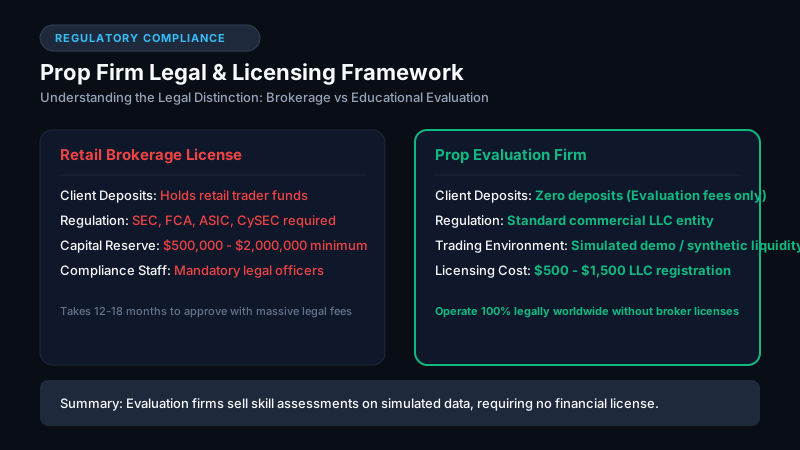
Traditional brokers take client money and invest or trade it on their behalf. That activity requires a license in virtually every jurisdiction.
Prop firms using the funded trader evaluation model work differently. The firm is not managing client funds. Traders pay a fee to attempt an evaluation on a simulated account. If they pass, they receive a funded account that also trades on simulated positions against live market pricing.
No client money is being invested. The firm is selling access to an evaluation program and, if passed, a revenue-sharing arrangement on simulated trading results.
This distinction is what has allowed thousands of prop firms to operate globally without broker licenses. The challenge fee is the product, not investment management.
What Regulators Have Actually Focused On
The regulatory attention on prop firms in 2024 and 2025 focused on specific behaviors, not the model itself.
Misleading marketing. Several firms implied traders were using real capital when they were not. Regulators in some jurisdictions flagged this as deceptive.
Payment processing. Some firms had accounts frozen because processors flagged high chargeback rates. This is an operational risk, not a regulatory one.
Specific jurisdictions. The CFTC in the United States took action against My Forex Funds in 2023, though the case was later dismissed with legal costs awarded against the agency. The case created uncertainty but did not establish that the prop firm model itself was illegal.
Italy's CONSOB raised questions about challenge-based prop firms in 2024, framing the evaluation mechanics as potentially deceptive. This has not resulted in industry-wide regulation as of mid-2026.
The pattern is consistent: regulators have targeted firms with deceptive practices, not the evaluation model itself when operated transparently.
Skip the monthly fees
Own your prop firm platform outright. One time purchase.
Full source code. Live in 7 days. No revenue share. No monthly SaaS bill. See the exact platform before paying anything.
Demo login: haris / asdf1122. No signup needed
What You Actually Need Before Launching
A registered business entity. Register a company in your jurisdiction. This is the minimum. Operating as a named business rather than an individual provides legal separation and looks more credible to traders.
Clear terms and conditions. Your platform needs terms that clearly explain what traders are buying. Specifically: that accounts are simulated, that challenge fees are non-refundable if the trader fails to meet the rules, and that funded accounts trade on simulated positions.
A refund policy. Some jurisdictions require this. Even where not legally required, a clear refund policy reduces chargebacks.
Payment processing that accepts your business type. Some payment processors have become cautious about prop firm clients following high chargeback rates industry-wide. Stripe accepts prop firm businesses in most countries when your terms are clear. Crypto payments via USDT avoid this issue entirely.
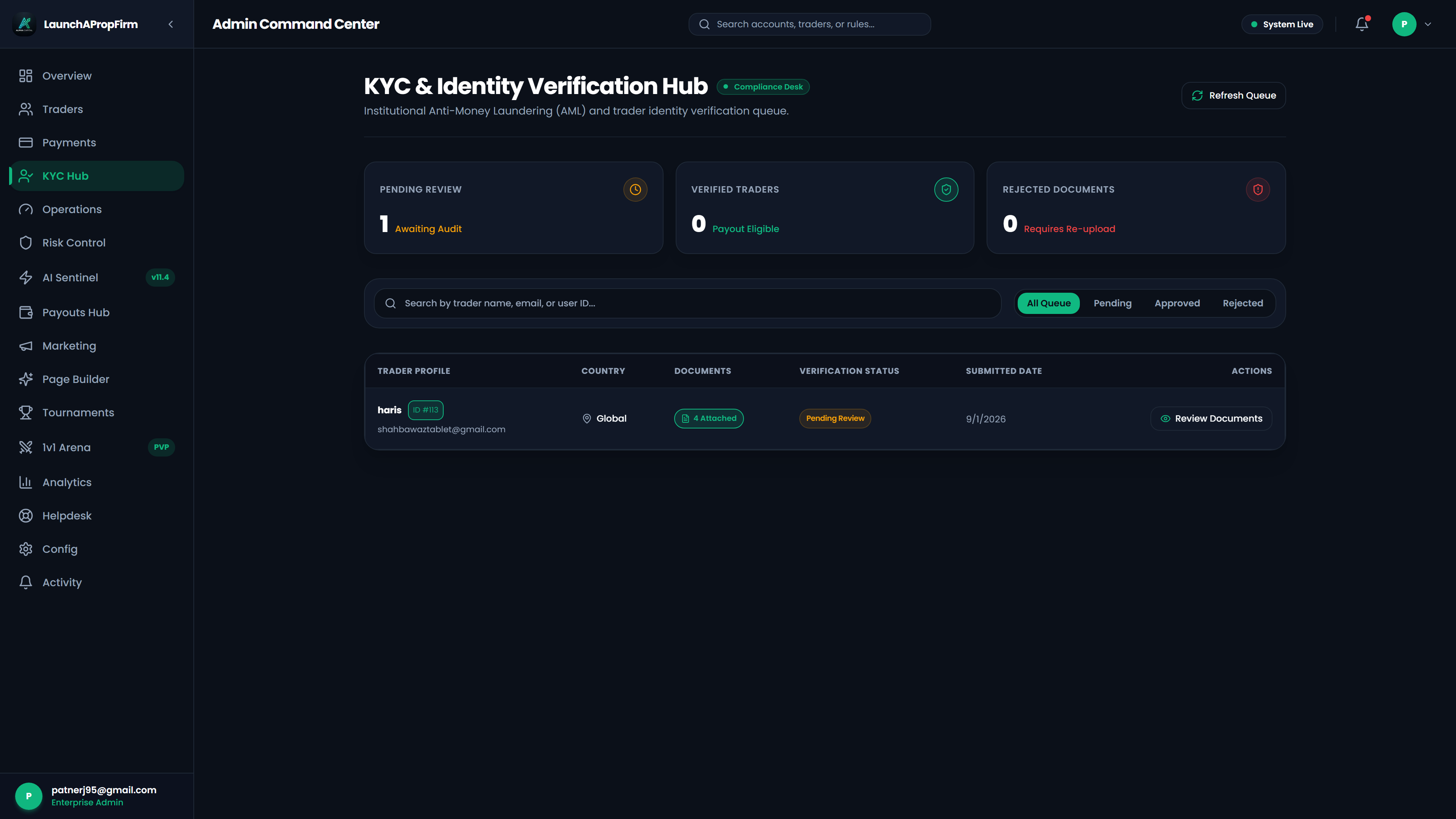
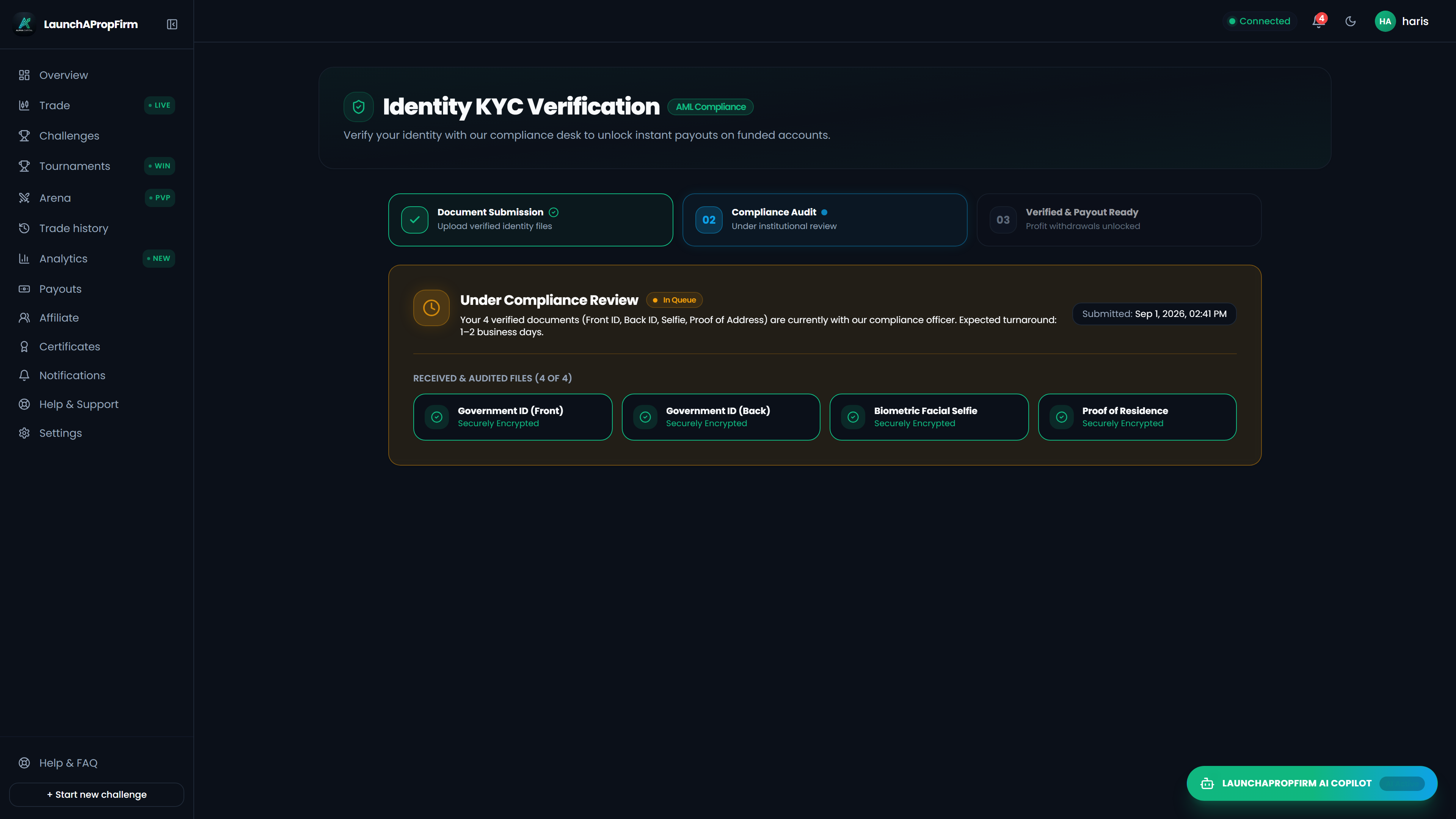
Basic KYC for funded traders. Collecting identity documents from traders who reach funded status is standard practice and reduces fraud risk. It is not a regulatory requirement in most jurisdictions, but it is good practice.
What You Do Not Need
You do not need a broker license to run a funded trader evaluation business in most countries. The model does not involve managing client funds or providing investment advice.
You do not need to register as an investment firm, a money service business, or a financial institution if you are operating the standard evaluation model with simulated accounts.
You do not need a specific "prop firm license" because no such license category exists in most jurisdictions. The business is closer to an educational or performance evaluation service than a financial services firm.
Country-Specific Considerations
The legal environment varies. Some notes on key markets:
United Kingdom. The FCA has not specifically regulated funded trader evaluation businesses. Operating a prop firm in the UK under the standard model does not require FCA authorization as of mid-2026. Monitor FCA guidance as the regulatory environment is evolving.
United States. The CFTC and SEC focus on firms that manage actual client capital. Funded trader evaluation businesses operating with simulated accounts have generally operated outside these regulatory frameworks. Consult a US attorney before launching if you plan to take on US traders.
European Union. MiFID II regulates investment services involving real capital. The funded trader evaluation model operating on simulated accounts sits outside MiFID II in most analyses. Individual EU member states may have additional requirements.
Pakistan, UAE, Singapore, and other markets. Local financial regulators in these countries have not specifically addressed the funded trader evaluation model. Standard business registration requirements apply.
The Most Important Thing to Get Right
The legal question is secondary to the transparency question.
Firms that have faced regulatory problems were not shut down because they ran prop firms. They were targeted because their marketing was misleading, their terms were unclear, or their behavior toward traders was unfair.
Run a transparent operation. Be clear in your marketing that accounts are simulated. Be clear in your terms about what happens when traders breach rules. Pay out funded traders who earn profits.
That approach is both legally sound and the right way to build a business that lasts.
Quick Reference: What You Need vs What You Do Not
Need:
- Registered business entity
- Clear terms and conditions
- Refund policy
- KYC for funded traders
- Transparent marketing
Do not need:
- Broker license
- Investment firm registration
- Specific prop firm license
- FCA/CFTC registration (in most cases)
This is not legal advice. Requirements vary by jurisdiction and change over time. If you are uncertain about your specific situation, consult a lawyer in your country before launching.
See what a properly structured prop firm platform looks like
Risk Warning: Regulatory requirements for funded trader evaluation businesses are evolving. What is unregulated today may require a license in 12 to 24 months. Operators should structure their business and marketing to be compliant with future regulation, not just current rules. Clear marketing language and proper business registration are the two most important steps.
Frequently Asked Questions
Does running a prop firm require a financial services license?
In most jurisdictions, no. The funded trader evaluation model operates on simulated accounts and does not fall under broker, investment manager, or financial advisor licensing in the US, UK, EU, or UAE under current regulatory frameworks. Always verify with a local lawyer before launch.
What is the difference between a licensed broker and a funded evaluation firm?
Licensed brokers manage real client capital in live markets and are subject to capital requirements, client protection rules, and regulatory oversight. Funded evaluation firms run simulated accounts and charge challenge fees. The regulatory treatment is different in most jurisdictions.
What happened with the CFTC action against MyForexFunds?
The CFTC filed charges in 2023 alleging misleading marketing about the nature of accounts. The case was ultimately dismissed with costs awarded against the CFTC. The key lesson: the business model itself was not the issue. The marketing language was.
What business structure should a prop firm operator use?
A registered limited liability company (LLC in the US, Ltd in the UK) is the standard structure. Running the business through a personal account creates unlimited liability. Business registration also improves credibility with payment processors and banking partners.
Which jurisdictions are most favorable for launching a prop firm?
The UK, UAE (particularly DIFC and free zones), and Eastern European countries are currently the most common domiciles. UK Ltd registration is straightforward and recognized globally. UAE free zone registration offers tax advantages. US LLC is popular but requires attention to state-specific rules.
Calculate SaaS Monthly Rent vs 1-Time Code Ownership
SaaS prop firm providers charge $2,500/mo plus 8% revenue share. Compare 12-month total expenses vs 100% source code ownership.
Prop Firm Monthly Profit Simulator
Simulate your challenge revenue, payout liability, and net monthly take-home profit.
$20,000
From upfront challenge fees-$2,800
~10 funded payouts budgeted$0 / month
Saves $3,000/mo vs SaaS$17,200/mo
Run-rate: $206,400/yr
M.Haris
Founder & Platform ArchitectBuilding open prop trading software infrastructure for operators worldwide
I built LaunchPropFirm to give forex educators, trading communities, and fintech operators complete ownership of their platform with full source code and zero monthly SaaS rent. Every article on this blog is drawn from hands-on platform development, live MT5 risk bridge mechanics, and real operator economics.
All content, financial models, ROI estimates, and architecture guides on LaunchPropFirm are published strictly for educational and informational purposes. LaunchPropFirm provides institutional prop trading software and technology infrastructure; it does not operate as a broker, custodian, or registered investment advisor.
Evaluation challenges and funded trader accounts referenced in this guide operate in simulated demo trading environments using real-time market data feeds. Simulated trading results do not represent actual trading performance or financial advice.
Recommended Next Reads
Hand-picked operator guides to scale your prop trading platform.
Instant Funding Prop Firm: Launch in 7 Days
Instant funding prop firms skip the challenge phase. Here is how to launch the model, protect your capital with hard risk limits, and go live in 7 days.
What Is a Prop Firm? Beginner's Guide & Overview
What is a proprietary trading firm? A beginner's guide explaining funded accounts, evaluation models, profit splits, and how retail prop firms operate in 2026.
Skip the monthly fees
Own your prop firm platform outright. One time purchase.
Full source code. Live in 7 days. No revenue share. No monthly SaaS bill. See the exact platform before paying anything.
Demo login: haris / asdf1122. No signup needed