Prop Firm IP Address Rules: VPN, VPS & Dynamic IP Ban Traps
Understand the IP address rule in prop firms. Learn exact VPN restrictions, dedicated VPS allowances, dynamic residential IP rules, and how to prevent bans.
What Prop Firm IP Address Rules Actually Mean
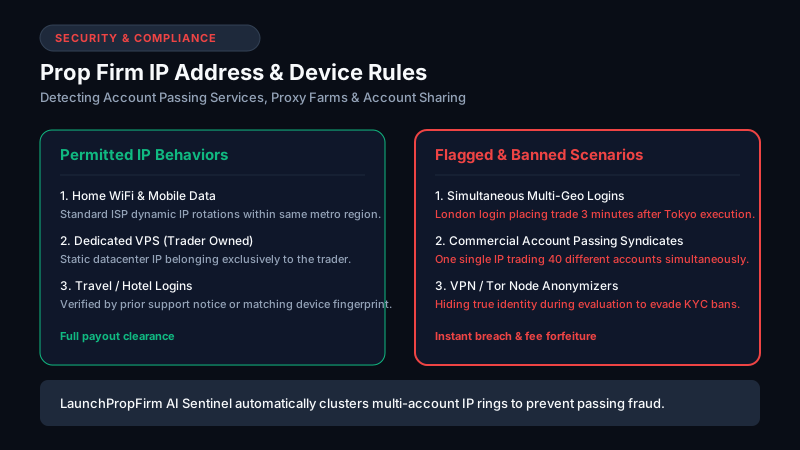
Prop firm IP address rules monitor the network locations used to access trading accounts and client dashboards. Modern prop trading firms track internet protocol addresses to verify account security and prevent unauthorized account sharing. Every time you log in to execute a trade, your device transmits an IP address linked to your geographic location and internet service provider.
Firms use this network data to distinguish between genuine individual traders and prohibited third-party account management services. If five different funded accounts across different names log in from the identical residential IP address, the firm flags a potential syndicate. Similarly, if an account jumps between Germany and Singapore within twenty minutes, automated risk filters detect impossible travel anomalies.
Understanding these network policies protects your funded capital from accidental compliance violations. While most firms permit normal travel and mobile trading, unapproved proxy servers or shared commercial VPNs can trigger account investigations and delay payout approvals.
Allowed Versus Prohibited IP Address Scenarios
Trading from multiple locations is a normal part of life, but certain network behaviors raise immediate red flags. Prop firms categorize connection types based on their likelihood of concealing identity fraud or account passing schemes.
Home residential internet connections and domestic mobile phone hotspots are completely safe. Prop firms understand that your dynamic residential IP might rotate weekly or change when you switch to mobile 5G data. As long as the geographical region remains consistent with your KYC registration profile, these routine network changes never trigger breaches.
Commercial VPN services and public web proxies present serious operational risks. Hundreds of internet users often share the same public VPN server address simultaneously. If another trader on that shared IP uses a banned high-frequency bot or breaches risk rules, your account may get linked to their malicious activity.
Dedicated private virtual servers provide a stable alternative for algorithmic traders. If you run expert advisors or trade from multiple workstations, leasing a static private VPS ensures that your account always executes from one dedicated network address.
| Connection Type | Approval Status | Risk Level | Operational Guidance |
|---|---|---|---|
| Home Residential Wi-Fi | Fully Allowed | Low | Safe for all trading sessions and account management |
| Mobile 5G Data Hotspot | Fully Allowed | Low | Reliable backup when primary home connection fails |
| Dedicated Private VPS | Fully Allowed | Low | Ideal for continuous automated expert advisors |
| Hotel / Airport Wi-Fi | Conditionally Allowed | Medium | Safe for brief sessions; notify support during long trips |
| Shared Commercial VPN | Heavily Restricted | High | Dangerous; shared addresses can link you to banned traders |
| Public Web Proxies | Strictly Prohibited | Critical | Triggers instant fraud flags and frozen payouts |
Why Prop Firms Enforce Strict IP Matching Rules
Prop trading firms operate under rigorous financial compliance mandates and contractual risk models. In simulated funded accounts, the firm backs the trader based on personal identity verification. IP matching rules work alongside prop firm copy trading rules to ensure accounts are traded by the actual applicant rather than pass farms and proven individual skill. Allowing unregulated third parties to trade funded accounts breaks the entire prop firm business model.
The primary target of IP address monitoring is commercial account passing services. Unscrupulous service providers charge retail traders upfront fees to pass evaluations using high-speed news straddles or reverse arbitrage. Once passed, the third party trades the funded account remotely while skimming a percentage of trader payouts.
IP matching algorithms detect these management farms by clustering matching connection signatures across unrelated accounts. When risk engines spot dozens of accounts executing synchronized positions from a single data center subnet, the system freezes all associated accounts.
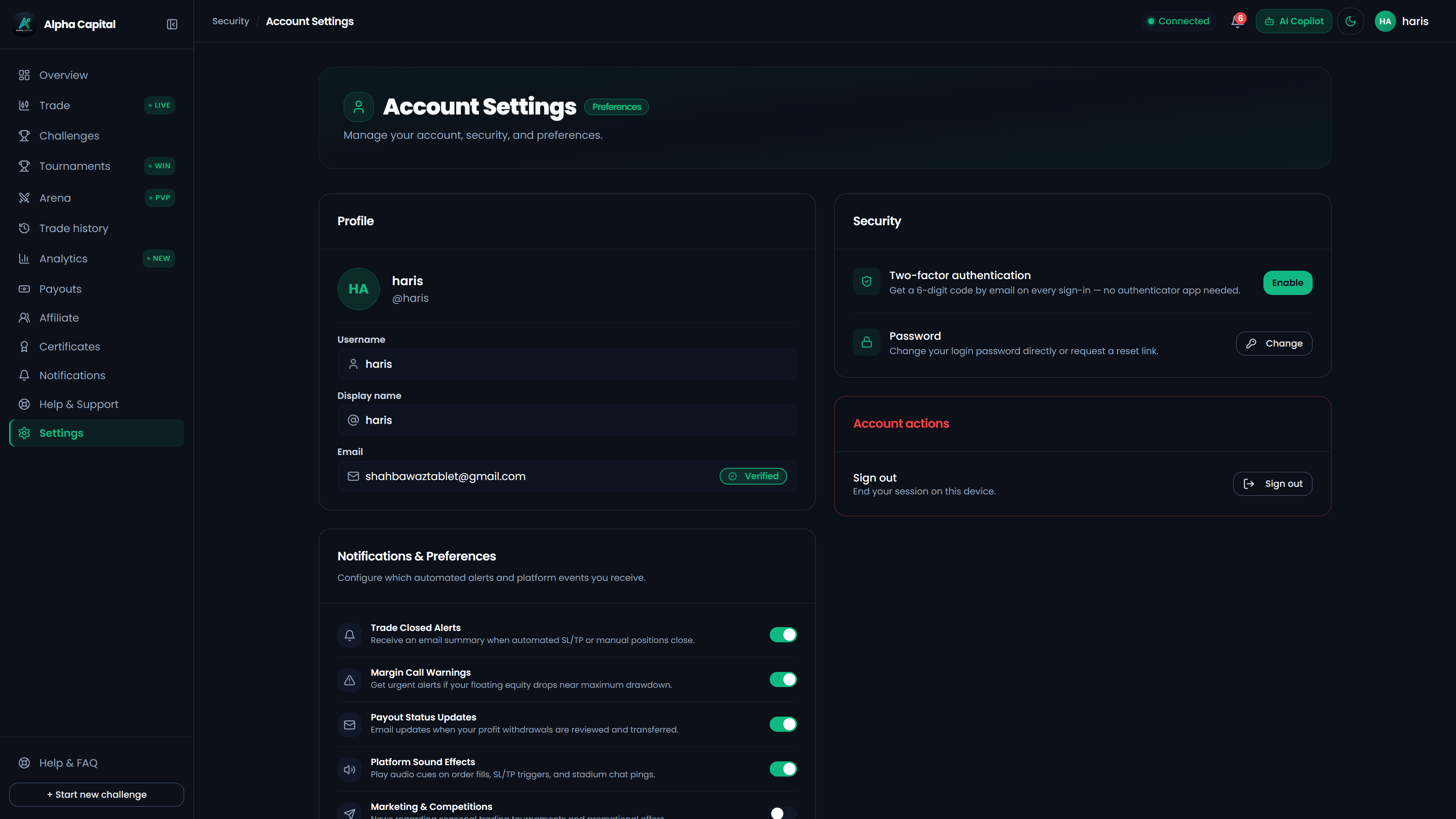
Operators building platforms through LaunchPropFirm configure these parameters inside automated risk engines. Automated monitoring logs device fingerprints, browser headers, and geographic coordinates alongside each executed ticket. This allows operators to catch coordinated syndicate fraud without penalizing honest retail traders who trade on vacation.
Operator Tip: Combine IP tracking with device fingerprinting in your risk engine to eliminate false positives caused by dynamic residential internet providers.
Skip the monthly fees
Own your prop firm platform outright. One time purchase.
Full source code. Live in 7 days. No revenue share. No monthly SaaS bill. See the exact platform before paying anything.
Demo login: haris / asdf1122. No signup needed
How to Trade Safely While Traveling or Using a VPS
Traveling internationally while managing a funded prop trading account requires simple precautions. Communicating with your firm before boarding a flight ensures your account remains in good standing throughout your journey.
Submit a quick travel notification to customer support before traveling to a new country. Inform the support desk of your destination, departure date, and expected return date. Most firms add a temporary whitelist note to your profile, preventing automated geolocation alerts from pausing your trading permissions.
Avoid public Wi-Fi networks in airports, cafes, and hotels whenever possible. Public networks often route traffic through centralized transparent proxies that trigger security warnings on MT5 gateways. Using your mobile phone roaming data hotspot provides a far more secure, isolated connection for trade management.
If you must use a virtual private network for personal privacy, invest in a dedicated static IP address. Unlike shared VPN subscriptions where your IP changes with every connection, a dedicated static IP belongs exclusively to you and eliminates the risk of shared blacklist penalties.
Risk Warning: Never allow a friend, mentor, or signal provider to log in to your account from their computer. A single login from their IP address can link your account to their trading history permanently.
What Happens When an IP Rule Violation Occurs
Discovering an unexpected compliance flag on your prop firm dashboard can feel alarming. Understanding how firms investigate network discrepancies helps you resolve the issue promptly and professionally.
Most reputable firms initiate a soft inquiry rather than issuing an immediate permanent ban. The compliance department will email you requesting proof of travel, such as airline boarding passes, hotel receipts, or utility bills matching your location. Providing verified travel documentation usually clears the flag within twenty-four to forty-eight hours.
Permanent account terminations occur when the firm discovers irrefutable proof of commercial account passing. If your IP address matches known server clusters belonging to banned management syndicates, the firm cancels the evaluation and voids accumulated profits.
Review our guide on prop firm challenge systems to understand overall evaluation rules. You can also explore how prop firm risk management software audits trader activity, or read our breakdown of the prop firm consistency rule for complete payout compliance.
FAQ
Can I use a VPN while trading on a prop firm account?
Most prop firms discourage or prohibit commercial shared VPNs because shared IP addresses can link your account to other banned traders. If you need a VPN, obtain permission from support or use a dedicated private IP address.
Can I trade my prop firm account from two different computers?
Yes. You can trade from your desktop at home and your laptop at work as long as you are the sole person accessing the account. Firms check that trading styles and device fingerprints match your personal profile.
What happens if I trade while traveling abroad on vacation?
Trading abroad is generally permitted, but you should notify customer support before traveling. Submitting a quick travel ticket prevents automated security engines from flagging your account for suspicious international access.
Why do prop firms ban account management services?
Prop firms evaluate and fund individual traders based on personal identity and risk discipline. Third-party account managers violate terms of service, concentrate financial risk, and often exploit prohibited arbitrage strategies.
How do prop firm risk engines track trader IP addresses?
Modern platforms log your IP address, internet provider, geolocation, and browser fingerprint with every order submission. Automated risk systems compare these logs across all platform accounts to identify duplicate networks.
Evaluate Your Prop Firm Readiness Score (0-100)
Answer 5 quick operational questions about your acquisition channels, runway, and engine tech to get a personalized launch roadmap.
Prop Firm Monthly Profit Simulator
Simulate your challenge revenue, payout liability, and net monthly take-home profit.
$20,000
From upfront challenge fees-$2,800
~10 funded payouts budgeted$0 / month
Saves $3,000/mo vs SaaS$17,200/mo
Run-rate: $206,400/yr
M.Haris
Founder & Platform ArchitectBuilding open prop trading software infrastructure for operators worldwide
I built LaunchPropFirm to give forex educators, trading communities, and fintech operators complete ownership of their platform with full source code and zero monthly SaaS rent. Every article on this blog is drawn from hands-on platform development, live MT5 risk bridge mechanics, and real operator economics.
All content, financial models, ROI estimates, and architecture guides on LaunchPropFirm are published strictly for educational and informational purposes. LaunchPropFirm provides institutional prop trading software and technology infrastructure; it does not operate as a broker, custodian, or registered investment advisor.
Evaluation challenges and funded trader accounts referenced in this guide operate in simulated demo trading environments using real-time market data feeds. Simulated trading results do not represent actual trading performance or financial advice.
Recommended Next Reads
Hand-picked operator guides to scale your prop trading platform.
Funding Pips Account Sizes and Prices 2026: Evaluation Tiers, Rules, and Scaling Plan
Complete 2026 Funding Pips account sizes and prices guide. Compare challenge fees ($5k to $100k), 2-step evaluation rules, drawdown limits, and the $2M scaling plan.
List of Prop Trading Firms (2026 Directory): Best Evaluated and Instant Funding Programs
Complete 2026 list of prop trading firms. Compare the top 6 evaluated prop firms across platforms (MT5, cTrader), drawdown rules, profit splits, and entry fees.
Skip the monthly fees
Own your prop firm platform outright. One time purchase.
Full source code. Live in 7 days. No revenue share. No monthly SaaS bill. See the exact platform before paying anything.
Demo login: haris / asdf1122. No signup needed