Swing Trading Prop Firm Guide for 2026
Most prop firms allow swing trading but overnight hold rules and drawdown types vary. Here is what swing traders must check before picking a firm and challenge.
Swing trading is a style where traders hold positions for one to five days to capture medium-term price moves. Most prop firms allow it, but the specific rules around overnight holds, weekend positions, drawdown type, and news events vary significantly between firms.
Here is what swing traders need to check before choosing a prop firm and how to structure a challenge attempt around a swing strategy.
Do Prop Firms Allow Swing Trading?
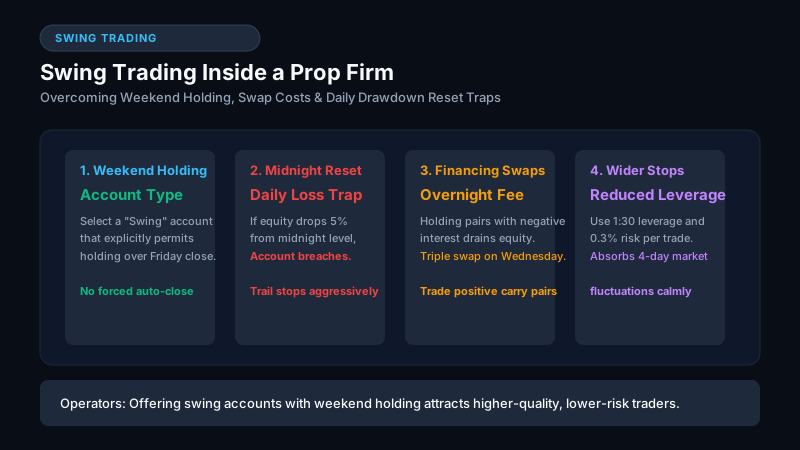
Most prop firms permit swing trading, including overnight and multi-day holds. The rules that cause problems for swing traders are not about holding period but about drawdown policy on open positions.
The key distinction is trailing drawdown versus static drawdown. A trailing drawdown floor rises as the account equity peaks, which means an open swing trade that dips temporarily can trigger a breach even if it recovers. Verify your overnight exposure and multi-day drawdown room with our Prop Firm Drawdown Calculator. A static drawdown fixes the floor at the starting balance regardless of profits made. Static drawdown is significantly more swing-friendly.
Always confirm drawdown type before purchasing a challenge if you plan to hold trades overnight.
Five Rules That Matter Most for Swing Traders
Overnight holds must be explicitly permitted. Most firms allow them, but some restrict all positions to intraday only. Protect your account from oversize pip swings by running your stop loss through the Prop Firm Lot Size Calculator. If the rules document says no overnight positions, the firm is not viable for swing trading regardless of what the marketing page says.
Weekend holds are more restricted than overnight holds at many firms. Some close all open positions at Friday market close automatically. Swing traders who trade weekly setups need to confirm weekend holds are explicitly permitted in the challenge rules.
News event restrictions can force position closes before major announcements. A swing trade held through NFP, CPI, or a rate decision can be invalidated by spread widening or slippage even if the directional view turns out correct. Check whether the firm restricts open positions during news events.
Drawdown calculation method determines whether floating losses count or only closed-trade losses count toward the drawdown limit. Firms that calculate drawdown on floating P&L are more restrictive for swing traders who need positions to breathe before closing in profit.
Trailing versus static drawdown is the single most important rule for swing traders. Static keeps the floor fixed from the start. Trailing moves the floor upward with equity highs, meaning past profits reduce future room to maneuver. This materially changes how many concurrent positions are safe to hold.
Swing Trading Rule Comparison
| Rule | Swing Trader Impact | What to Confirm |
|---|---|---|
| Overnight holds | Critical | Explicitly permitted in rules |
| Weekend holds | High | Check, not assumed |
| News restrictions | Medium | Affects timing of open trades |
| Drawdown on floating P&L | High | Closed-trade only is better |
| Drawdown type | Critical | Static beats trailing |
| Minimum trading days | Low | 5-10 days standard |
Skip the monthly fees
Own your prop firm platform outright. One time purchase.
Full source code. Live in 7 days. No revenue share. No monthly SaaS bill. See the exact platform before paying anything.
Demo login: haris / asdf1122. No signup needed
How to Pass a Challenge as a Swing Trader
Risk Warning: Weekend holds carry higher gap risk than standard overnight holds. A position held over a weekend on a currency pair or index can open Monday with a gap large enough to consume the daily loss limit before the session begins. Limit weekend position size to half your standard risk per trade.
The main challenge for swing traders in a funded evaluation is the daily loss limit. A position held overnight can gap against you at open and instantly consume the 5% daily limit before any reaction is possible.
Size overnight positions conservatively. If the firm's daily limit is 5% of account balance, an overnight hold should carry no more than 2% to 2.5% risk, leaving buffer for an adverse gap. Standard intraday positions can use the full 1% rule. See trading risk management for the full position sizing framework.
The daily and four-hour chart are more compatible with prop firm challenge rules than weekly charts. They generate more setups per week, making it easier to hit the minimum trading day requirement without forcing trades on thin setups.
Try the challenge experience before buying at demo.launchapropfirm.com. LaunchPropFirm is a white-label prop trading platform built for operators launching funded trader businesses, with one-time pricing, full source code, and no monthly revenue share. The demo shows live drawdown tracking and daily P&L limits exactly as traders experience them during a real challenge.
Swing Trading versus Day Trading in a Prop Firm Challenge
Both styles can pass a challenge. The risk profiles are different.
| Swing Trading | Day Trading | |
|---|---|---|
| Trade duration | 1-5 days | Minutes to hours |
| Overnight gap risk | Yes | None (flat at day end) |
| Trades per week | 2-6 | 5-25 |
| Time to hit min trading days | Slower | Faster |
| Daily limit breach risk | Higher (gaps) | Lower (controlled intraday) |
| Best drawdown type | Static | Either |
Swing trading takes longer to hit the minimum trading day requirement because entry frequency is lower. Day traders hit the minimum faster. Swing traders compensate with larger individual trade returns when setups align, which can offset the lower frequency.
Which Prop Firms Work Best for Swing Traders
The firms best suited to swing traders share three characteristics: explicit overnight and weekend hold permission, static drawdown (not trailing), and drawdown calculated on closed trades only (not floating P&L).
Read how to pass a prop firm challenge for the rules framework that applies to all challenge types. The challenge rules document at any firm is more reliable than the marketing page for confirming what is actually permitted.
LaunchPropFirm operators can configure every challenge parameter, including whether overnight holds, weekend holds, and news trading are permitted. Operators building platforms for swing-focused trader communities can tailor the entire challenge structure accordingly.
FAQ
Can you swing trade in a prop firm?
Yes. Most prop firms allow swing trading, including overnight and multi-day holds. The key rules to verify are whether overnight holds are explicitly permitted, whether the drawdown is static or trailing, and whether open floating P&L counts toward the drawdown limit.
What is the risk of swing trading in a prop firm challenge?
The main risk is gap risk on overnight and weekend holds. A position that gaps against you at market open can trigger the daily loss limit before any action is possible. Limiting overnight position size to 1% to 2% risk rather than the standard 1% to 3% leaves buffer for adverse gaps without breaching the daily limit.
Does swing trading work for hitting a prop firm profit target?
Yes. Swing trades that capture 1% to 3% per position can reach an 8% to 10% profit target within 30 days with four to six successful trades. The challenge is hitting the minimum trading day requirement when trade frequency is lower. Trading the daily or four-hour chart produces more setups without forcing weekly-chart traders into positions.
Can you hold a trade over the weekend in a prop firm?
Some firms allow it, some do not. Read the challenge rules document specifically rather than assuming. Even firms that allow weekend holds sometimes restrict position size or require closure during high-impact events. Never assume weekend holds are permitted without confirming in the rules.
What drawdown type is best for swing traders?
Static drawdown is better for swing traders. Static keeps the floor fixed at the starting balance regardless of profits made. Trailing drawdown rises with equity peaks, which reduces the room available for open swing positions as the account grows. Trailing drawdown punishes the very profits swing traders work to build.
Evaluate Your Prop Firm Readiness Score (0-100)
Answer 5 quick operational questions about your acquisition channels, runway, and engine tech to get a personalized launch roadmap.

M.Haris
Founder & Platform ArchitectBuilding open prop trading software infrastructure for operators worldwide
I built LaunchPropFirm to give forex educators, trading communities, and fintech operators complete ownership of their platform with full source code and zero monthly SaaS rent. Every article on this blog is drawn from hands-on platform development, live MT5 risk bridge mechanics, and real operator economics.
All content, financial models, ROI estimates, and architecture guides on LaunchPropFirm are published strictly for educational and informational purposes. LaunchPropFirm provides institutional prop trading software and technology infrastructure; it does not operate as a broker, custodian, or registered investment advisor.
Evaluation challenges and funded trader accounts referenced in this guide operate in simulated demo trading environments using real-time market data feeds. Simulated trading results do not represent actual trading performance or financial advice.
Recommended Next Reads
Hand-picked operator guides to scale your prop trading platform.
Prop Firm Passing Services: The Scam, IP Traps & Ban Reality
Prop firm passing services promise guaranteed challenge passes, but 99% get banned before payouts. Exposing syndicate IP radar and broker latency traps.
Congrats on Being a Funded Trader: First 48-Hour Protocol
Received the 'congrats on being a funded trader' email? Here is the exact survival protocol for KYC verification, contract signing, and your first payout.
Skip the monthly fees
Own your prop firm platform outright. One time purchase.
Full source code. Live in 7 days. No revenue share. No monthly SaaS bill. See the exact platform before paying anything.
Demo login: haris / asdf1122. No signup needed