Leverate Alternative: SiRiX Prop vs Self-Hosted Code
Looking for a Leverate alternative? Compare SiRiX Prop SaaS costs, turnover volume fees, and LXCRM against 100% source code ownership for $2,495.
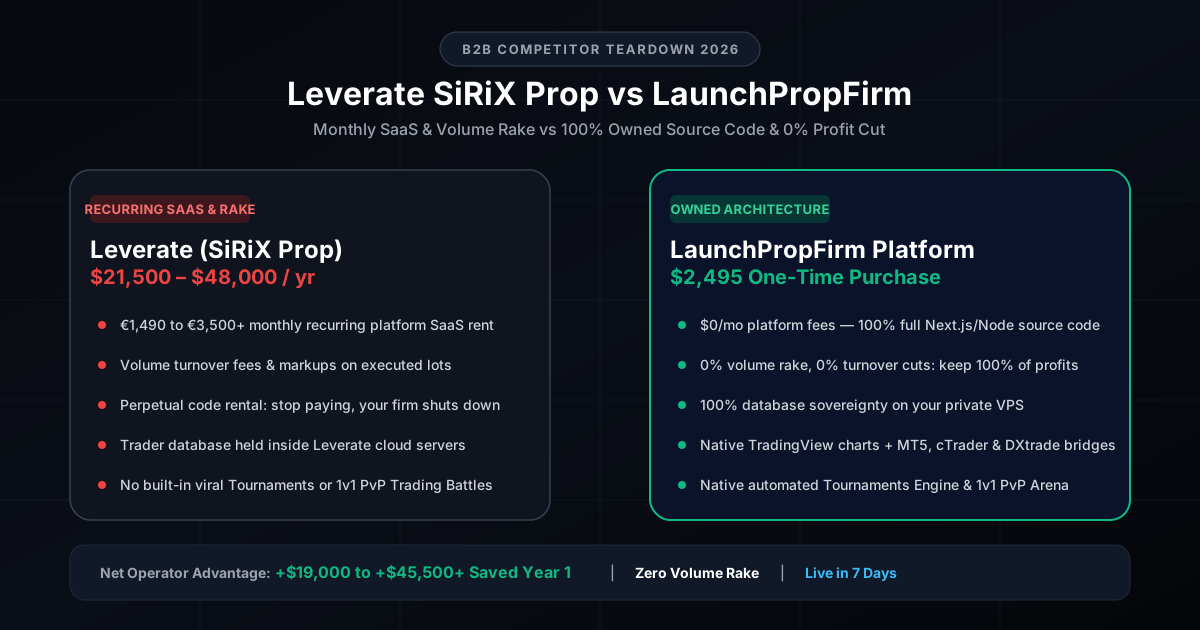
Benchmarked on our institutional prop firm platform comparison, Leverate has been an institutional fixture in the retail brokerage technology space since 2008. With the surge of proprietary evaluation firms, the Cyprus and Tel Aviv-based fintech provider repackaged its legacy brokerage ecosystem into SiRiX Prop, pitching turnkey trading platforms, risk management, and integrated CRM to prospective prop firm operators.
However, as hundreds of new prop firms enter the market in 2026, many operators find themselves trapped by Leverate's traditional brokerage pricing philosophy: steep recurring monthly SaaS retainers, per-active-account tiers, and turnover volume markups.
If you are evaluating SiRiX Prop or looking for a modern, high-margin Leverate alternative that gives you 100% source code ownership and zero monthly fees, this teardown examines the architecture, hidden operational costs, and mathematical trade-offs.
The Core Philosophy Shift: Retail Brokerage SaaS vs Independent Prop Firms
To understand why so many founders seek a Leverate alternative, you must look at Leverate's origins. Leverate was engineered from the ground up as a technology provider for heavily capitalized, regulated retail forex brokers.
Their ecosystem is structured around four legacy pillars:
- SiRiX Trading Platform: A proprietary trading terminal available as web, mobile, and desktop applications, integrated with TradingView charting.
- LXCRM: A specialized brokerage customer relationship management portal designed for sales retention desks and KYC compliance.
- LXRisk: A centralized risk console supporting A-Book STP routing, B-Book internal matching, and hybrid book models.
- Leverate Prime: Proprietary Prime of Prime liquidity connectivity intended to route live trade flow.
While this bundled ecosystem makes sense for a multi-million-dollar regulated brokerage servicing depositing retail traders, it imposes massive financial drag on modern evaluation prop firms.
Prop firms do not operate like traditional brokers. 90% of challenge participants trade in simulated demo environments. Forcing a prop firm to pay brokerage-scale software retainers and trading turnover fees on simulated volume destroys front-end margins.
The Hidden Cost Trap: Monthly SaaS Rent & Volume Turnover Cuts
Leverate markets its solutions with attractive "zero setup fee" promotional campaigns. However, once you examine the ongoing operational invoice, the true financial commitment becomes apparent.
1. The Baseline Monthly Retainer (€1,490 - €3,500/mo)
Leverate's entry-tier "Start-up" package begins at €1,490 per month (approximately $1,620 USD). For active or scaling prop firms requiring custom branding, expanded concurrent trader accounts, and priority SLA support, the baseline retainer rapidly escalates to €3,500+ per month. Over a single operating year, an operator commits $19,500 to $42,000+ solely to keep the platform online.
2. Volume Turnover Fees (The Invisible Rake)
Because Leverate's roots lie in brokerage infrastructure, their commercial contracts frequently feature volume turnover charges or clearing markups on executed lots. When your marketing funnels succeed and thousands of traders execute high-frequency intraday trades, Leverate captures a slice of your volume. This variable tax punishes scaling firms for acquiring active day traders.
3. Account-Tier Penalties
As your firm grows from 200 to 2,000 active challenge accounts, legacy SaaS vendors bump you into higher subscription brackets. You are effectively penalized for scaling your marketing.
To calculate how these recurring fees compound against your cash reserves, compare your numbers inside our interactive SaaS vs Self-Hosted Calculator.
Architecture Comparison: Proprietary Cloud Rental vs 100% Owned Source Code
The fundamental difference between Leverate SiRiX Prop and LaunchPropFirm lies in who controls the software and the database:
| Architectural Dimension | Leverate SiRiX Prop | LaunchPropFirm Platform |
|---|---|---|
| Software Ownership | Closed Proprietary SaaS (Leased License) | 100% Full Next.js & Node Source Code Ownership |
| Pricing Model | €1,490 - €3,500/mo recurring ($19k-$42k/yr) | $2,495 One-Time Purchase (Fixed Flat Fee) |
| Volume Turnover Fees | Volume turnover cuts & clearing markups | 0% Volume Rake, 0% Revenue Share |
| Database Sovereignty | Stored on Leverate's shared cloud servers | 100% Sovereign on Your Private Linux VPS |
| Trading Interface | Proprietary SiRiX Terminal (Web/Mobile) | Native TradingView Browser Charts (PC, Tablet & Mobile PWA) |
| Platform Flexibility | Dependent on vendor roadmap & support tickets | Modify any rule, UI element, or payout workflow instantly |
| Broker Connectivity | Strongly tied to Leverate Prime liquidity | Open bridges to any broker, LP, or MT5/cTrader feed |
| Built-in Gamification | Basic leaderboards only | Native Tournaments Engine & 1v1 PvP Trading Battle Arena |
| Deployment Timeline | 2 to 4 weeks corporate onboarding | 7 Days from Purchase to Live Operations |
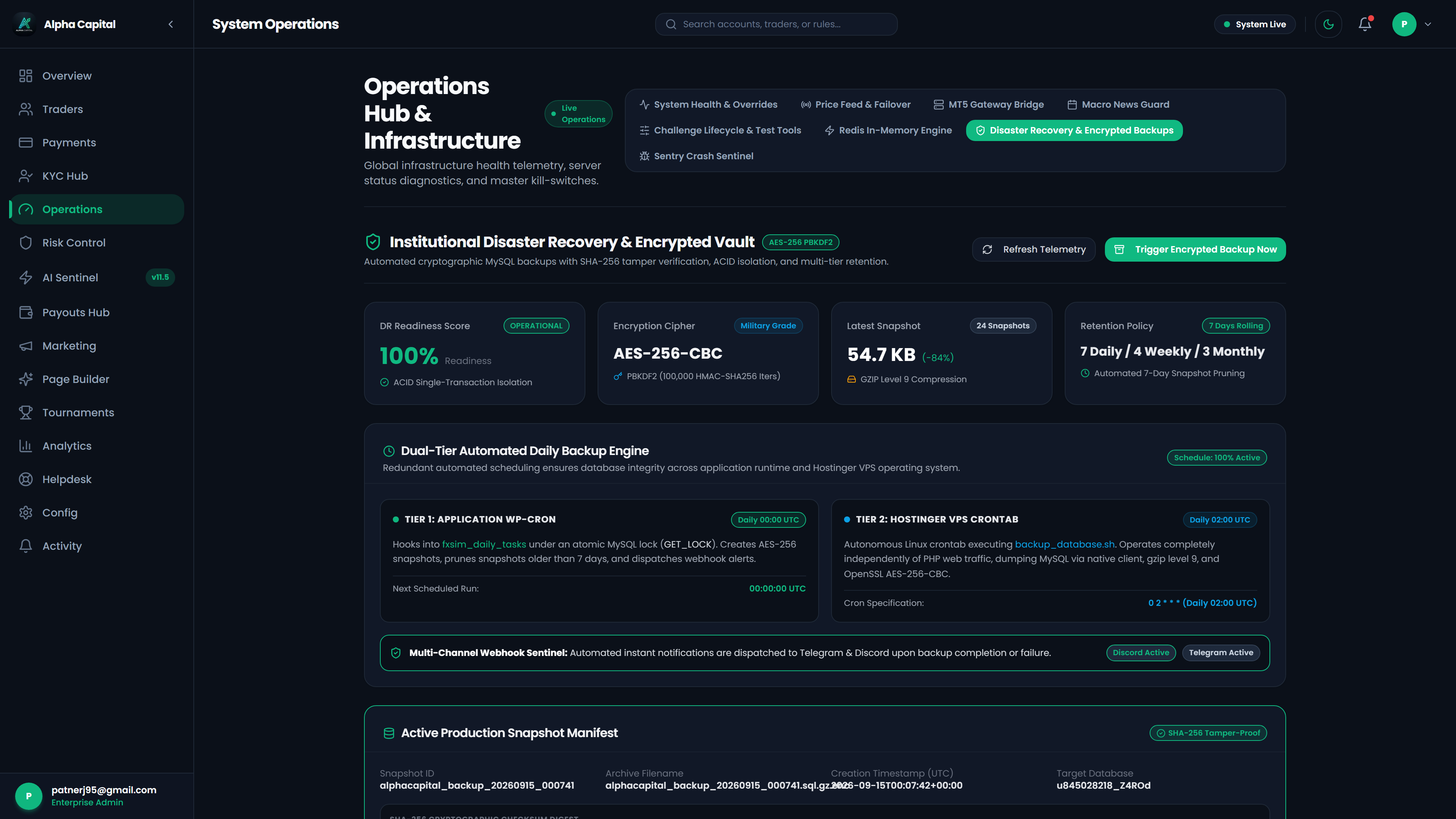
The Database Sovereignty Imperative
When you build a prop firm on Leverate or any hosted SaaS vendor, you do not own your operational database. Your trader credentials, transaction logs, email lists, and challenge histories reside on third-party infrastructure.
If you decide to terminate your contract, dispute fee escalations, or experience vendor downtime, your entire business is vulnerable. With LaunchPropFirm, the entire relational database, frontend, and backend deploy to your private Linux server (DigitalOcean, AWS, or Hetzner). Even if you never speak to us again, your platform operates indefinitely with zero external dependencies.
The Missing Gamification Layer: Why Modern Prop Firms Need Tournaments & 1v1 Battles
In 2024 and 2025, launching a standard prop firm with a basic 2-phase evaluation was sufficient to attract retail traders. In 2026, Customer Acquisition Cost (CAC) across Google Ads and Meta has surged by over 45%.
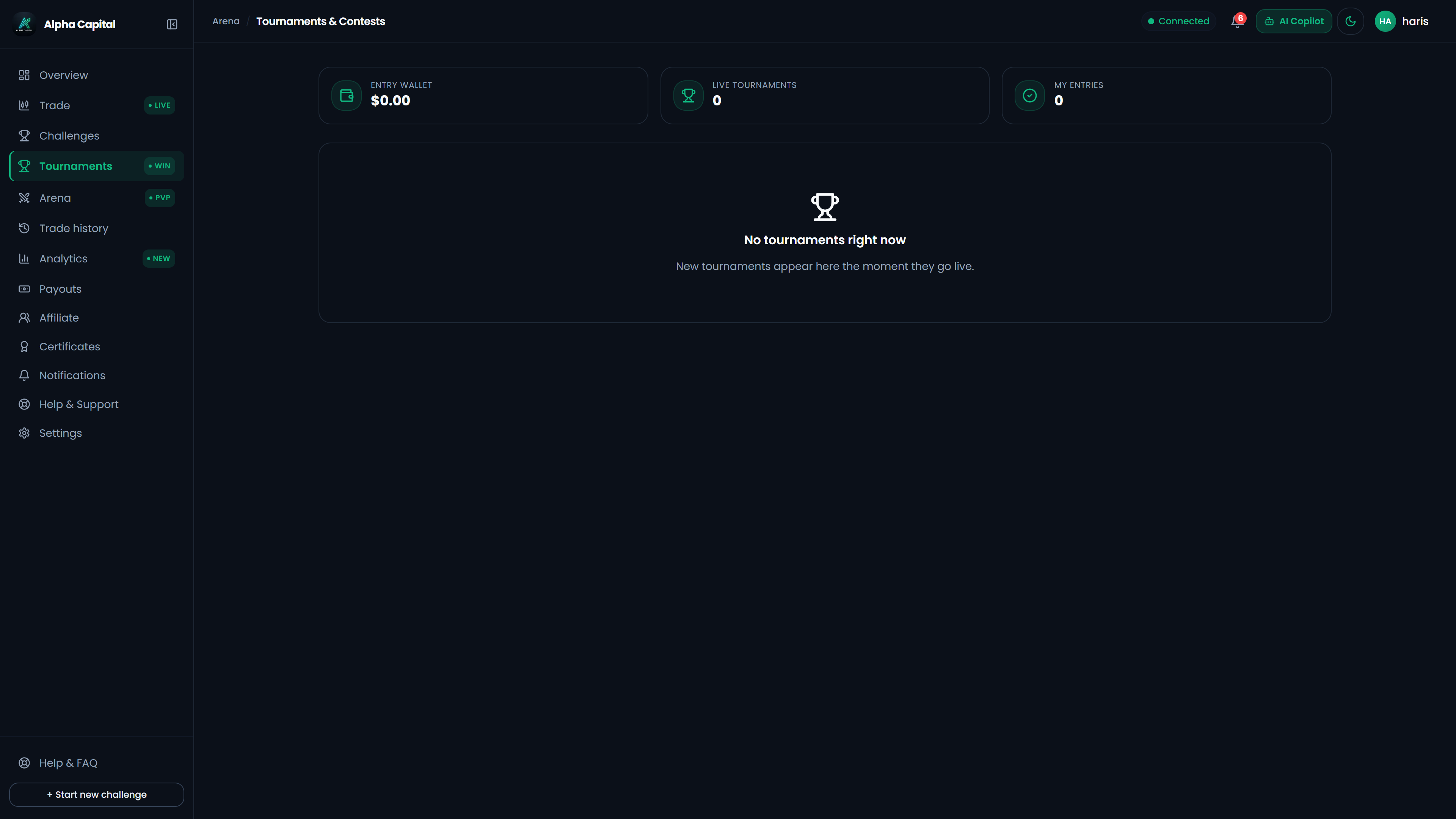
Legacy platforms like Leverate SiRiX Prop offer standard trading cabinets with basic account metrics. They lack modern viral acquisition engines.
LaunchPropFirm solves the acquisition problem by building native gamification into the client cabinet:
- Automated $0 Entry Tournaments: Launch monthly viral trading competitions with automated leaderboard scoring. Acquire 3,000 to 5,000 organic trader registrations per competition with $0 marketing ad spend, converting top performers into paid challenge buyers as detailed in our guide on The Traders Room architecture.
- 1v1 PvP Trading Battles: Traders challenge each other to 15-minute, 1-hour, or daily profit duels. The platform automatically holds the entry fees in escrow, tracks real-time PnL, awards the winner, and deposits an automated 5% to 10% platform rake directly into the operator's treasury.
These gamified features turn your client portal into an active trading community that generates daily revenue regardless of challenge sales volume.
Total Cost of Ownership: 2026 TCO Comparison Matrix
Let's examine the cold mathematical reality of operating on Leverate SiRiX Prop versus owning your software stack outright. While Leverate often markets entry packages with low setup fees, monthly SaaS retainers (€1,490 to €3,500/mo) and volume turnover markups on high-frequency trading flow create massive financial drag:
| Expense Component | Leverate SiRiX Prop Turnkey | LaunchPropFirm Sovereign Stack |
|---|---|---|
| Upfront Setup & Onboarding | $0 (Promotional) to $5,000 | $2,495 one-time fixed |
| Monthly Software Retainer | $24,000 to $42,000 ($2,000-$3,500/mo) | $0 / month forever |
| Volume Turnover & Clearing Markups | $11,000 to $18,000 / year (Lot turnover rake) | $0 (Zero volume markup) |
| Active Account Tier Overage | $3,500 / year (Tier scaling fees) | $0 (Unlimited challenge accounts) |
| Total Year 1 Operating Cost | $38,500 to $65,000 / year | $2,495 fixed |
| 3-Year Cumulative Expenditure | $95,000 to $180,000+ | $4,115 ($2,495 + private VPS) |
| Database & Client Data Control | Held on Leverate shared cloud | 100% Sovereign on private Linux VPS |
| Year 1 Net Operator Capital Saved | Baseline operational cost | +$36,005 to +$62,505 retained |
To model your firm's specific burn rate, challenge volume, and server expenses, simulate your margins in our interactive SaaS vs Self-Hosted Calculator. Eliminating monthly platform retainers and volume turnover markups ensures you preserve liquid reserves for funded trader withdrawals.
For a complete breakdown of startup capital requirements, review our detailed guide on white label prop firm costs and see how to structure your broker execution in our A-Book vs B-Book liquidity guide.
Migration Protocol: How to Transition from Leverate to an Owned Platform in 7 Days
If you are currently running on Leverate or evaluating their contract, transitioning to an owned software platform follows a straightforward 5-stage deployment:
- Database Export & Account Mapping: Export your existing trader list, challenge stages, and active funded account balances from LXCRM into standard CSV/SQL formats.
- Private VPS Provisioning: Provision a high-performance Linux VPS (Ubuntu 22.04 LTS, 8 vCPUs, 16GB RAM) in your preferred data center location (London LD4, New York NY4, or Frankfurt).
- Automated LaunchPropFirm Deployment: Deploy the complete Next.js frontend, Node.js risk daemon, and client cabinet in under 48 hours.
- Payment & Bridge Integration: Connect your existing Stripe API keys, crypto payment merchant wallets (USDT/BTC), and execution bridges into your broker or liquidity provider.
- Zero-Downtime Trader Cutover: Issue an automated email update to active traders directing them to your new branded web cabinet with preserved credentials and account balances.
Frequently Asked Questions
For comparisons with enterprise SaaS vendors charging $17,500+ setup fees, read our Quadcode alternative breakdown.
What is Leverate SiRiX Prop?
Leverate SiRiX Prop is a white-label software solution for prop trading firms developed by Leverate, offering the SiRiX trading platform, LXCRM back-office management, LXRisk controls, and liquidity connectivity under a monthly subscription SaaS model.
How much does Leverate SiRiX Prop cost?
Leverate pricing typically starts at €1,490 per month for entry-tier packages, scaling to €3,500+ per month plus volume turnover charges and tiered active account fees as the prop firm grows, amounting to $21,000 to $48,000+ per year.
Can I connect my own liquidity provider or broker to Leverate?
Leverate allows external bridge connectivity but strongly promotes its proprietary Leverate Prime liquidity ecosystem. In contrast, LaunchPropFirm gives operators complete freedom to connect any broker, liquidity feed, or simulated engine with zero markup.
Does LaunchPropFirm charge any monthly fees or turnover cuts?
No. LaunchPropFirm charges a single one-time purchase price of $2,495 with zero monthly software fees, zero per-account fees, and zero volume rake. Operators retain 100% of challenge sales and trading profits.
Calculate SaaS Monthly Rent vs 1-Time Code Ownership
SaaS prop firm providers charge $2,500/mo plus 8% revenue share. Compare 12-month total expenses vs 100% source code ownership.

M.Haris
Founder & Platform ArchitectBuilding open prop trading software infrastructure for operators worldwide
I built LaunchPropFirm to give forex educators, trading communities, and fintech operators complete ownership of their platform with full source code and zero monthly SaaS rent. Every article on this blog is drawn from hands-on platform development, live MT5 risk bridge mechanics, and real operator economics.
All content, financial models, ROI estimates, and architecture guides on LaunchPropFirm are published strictly for educational and informational purposes. LaunchPropFirm provides institutional prop trading software and technology infrastructure; it does not operate as a broker, custodian, or registered investment advisor.
Evaluation challenges and funded trader accounts referenced in this guide operate in simulated demo trading environments using real-time market data feeds. Simulated trading results do not represent actual trading performance or financial advice.
Recommended Next Reads
Hand-picked operator guides to scale your prop trading platform.
White Label Futures Prop Firm: Platform Setup Guide
Compare white label futures prop firm models like Apex against synthetic CFD platforms. Understand CME fees, Rithmic costs, and turnkey software margins.
Quadcode Alternative: PropCode vs Self-Hosted Code
Looking for a Quadcode alternative? Compare PropCode revenue share models and SaaS lock-in against 100% source code ownership for $2,495 once.
Skip the monthly fees
Own your prop firm platform outright. One time purchase.
Full source code. Live in 7 days. No revenue share. No monthly SaaS bill. See the exact platform before paying anything.