How to Choose a Prop Firm Tech Provider
Your prop firm technology provider determines your costs, ownership, and long-term flexibility. Here is exactly what to look for before signing any contract.
The Decision That Shapes Everything
Whether you are launching an institutional forex evaluation program or a dedicated white label futures prop firm, your software provider defines your operating margins from day one.
I made this decision when I was building LaunchPropFirm. It took longer than the branding, the marketing, and the pricing combined.
Most people spend weeks designing their prop firm brand. Logo colors, challenge rules, payout percentages.
Then they spend two hours picking the technology provider. That order is backwards.
Your technology provider determines your monthly costs, whether you own anything, how fast you can launch, and what happens to your business if the vendor shuts down or changes their pricing. It is the most consequential decision in the whole process.
See the platform before reading further
What a Prop Firm Technology Provider Actually Does
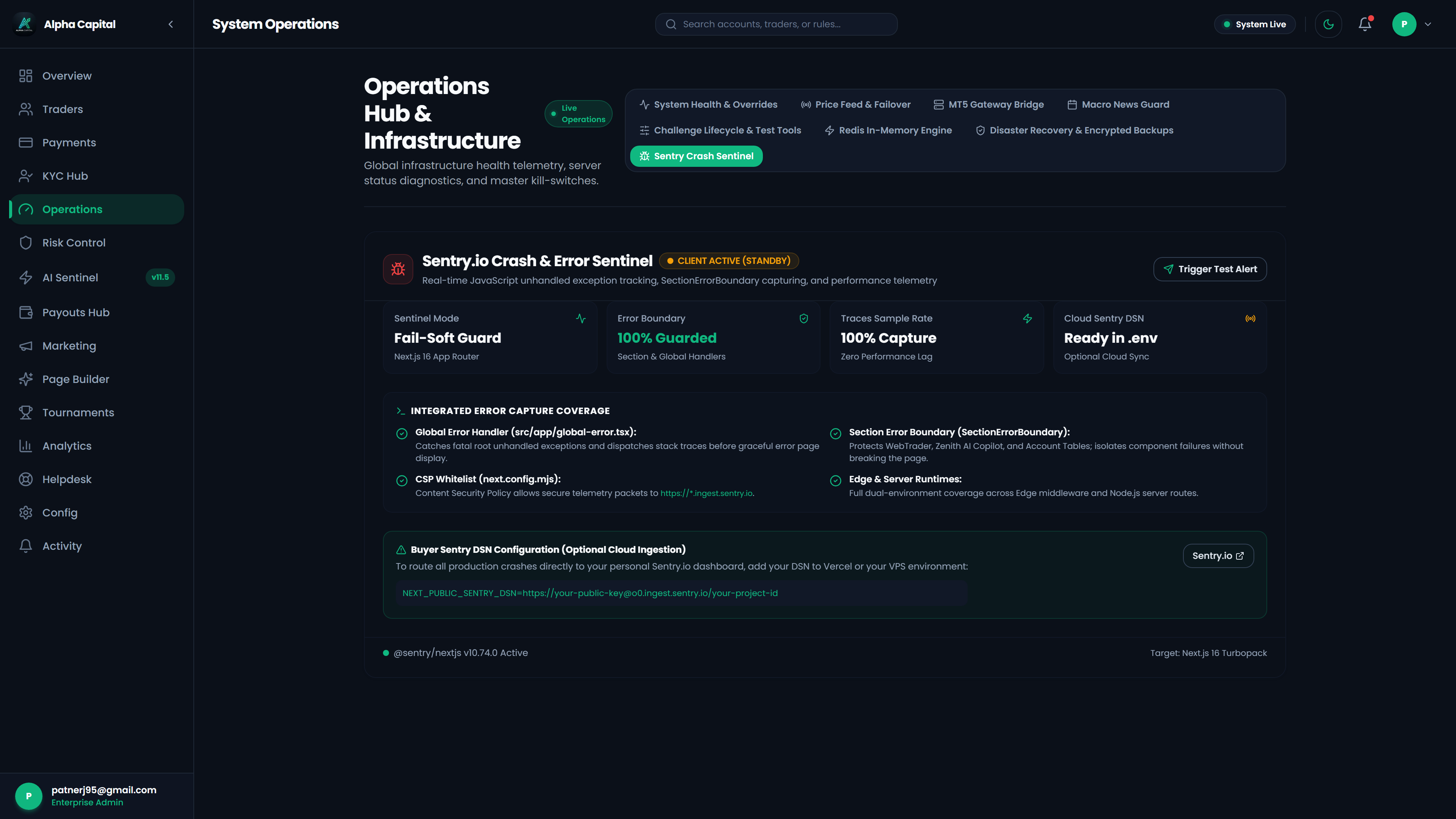
A prop firm technology provider gives you the software infrastructure to run a funded trader business.
This includes the trader dashboard where challengers log in, the trading terminal with live market pricing, the challenge evaluation engine that tracks profit targets and drawdown, the admin panel where you manage accounts, the payment processing integration, the payout system, and the certificate generator.
Without this software, you cannot run a prop firm. You would need to build all of it from scratch, which takes 12 to 18 months and $150,000 to $500,000. Inspect our full institutional platform specification sheet to see the exact architecture blueprints, database requirements, and broker bridge benchmarks needed for high-concurrency operations.
The provider question is not whether to use one. It is which model makes sense for your business.
The Two Models
Monthly SaaS: you pay every month for access. Code stays with the vendor. $1,000 to $5,000 per month. Enterprise SaaS providers like FPFX Tech charge heavy monthly retainers, while vendors like Leverate add volume turnover markups—compare these models in our FPFX Tech alternative and Leverate alternative teardown and our Quadcode alternative analysis.
After 36 months you have spent $36,000 to $180,000 and own nothing. Stop paying, firm goes dark.
One time license: you pay once, install on your own hosting, own it permanently. Pricing runs $2,500 to $10,000 depending on provider and tier. After 36 months your total spend including hosting is under $10,000. You own the platform outright.
Skip the monthly fees
Own your prop firm platform outright. One time purchase.
Full source code. Live in 7 days. No revenue share. No monthly SaaS bill. See the exact platform before paying anything.
Demo login: haris / asdf1122. No signup needed
What to Check Before Choosing Any Provider
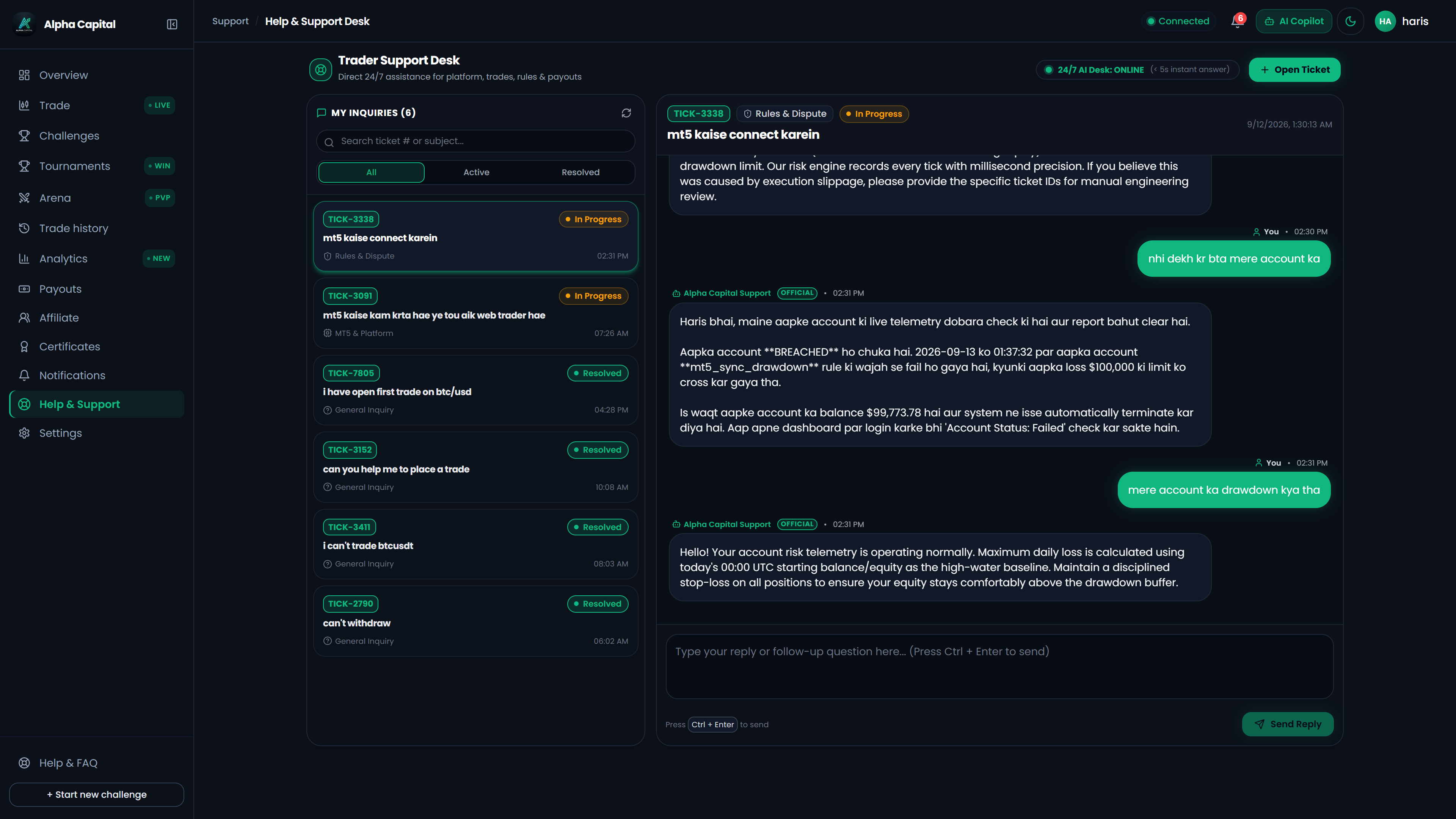
Connecting directly to trading servers requires robust bridges—review our prop firm MT5 server cost and bridge guide to evaluate latency and setup requirements before committing to a provider.
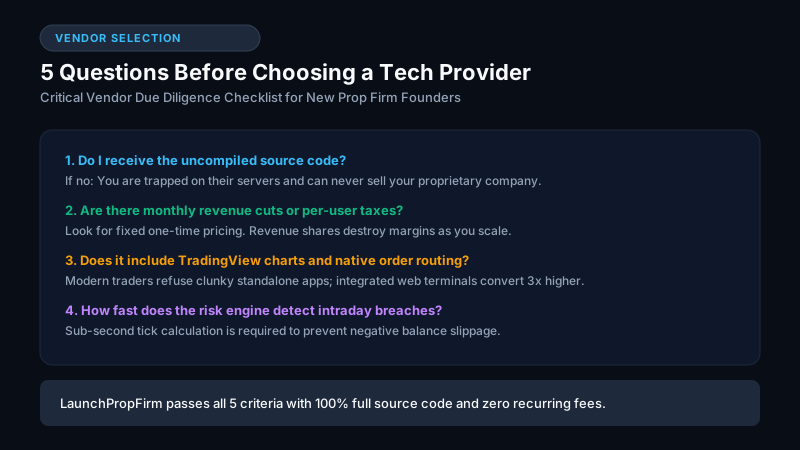
First question to ask: do you get the source code?
Some providers sell a one time license but withhold the code. You get a hosted version you cannot modify or move. That is SaaS with a different label.
With actual source code, you can modify the platform, move it to any host, hire developers, and sell your business with the software included. Without it, you are dependent on the vendor forever.
Second question: what does the three year total actually cost?
Do not compare headline prices. A $3,000 one time license with $70 per month in running costs is under $6,000 over three years. A $1,500 per month SaaS plan is $54,000 over the same period. That is a $48,000 difference.
Third question: what trading terminal is included?
The terminal is what challengers use every day. It needs live pricing and a clean interface.
Ask whether it runs on MT5 or TradingView. MT5 has wider trader familiarity. TradingView is popular with newer traders.
Fourth question: what happens if the vendor closes?
SaaS platforms disappear. It has happened multiple times in this industry. If you own source code on your own hosting, nothing changes. If you are on a hosted platform, you lose everything when the vendor does.
Fifth question: is payment processing built in?
You need Stripe for card payments and crypto for international traders. Some providers charge extra for integrations. Others include them. Confirm this before paying.
Sixth question: what does support look like after purchase?
Ask about bug handling, response times, and whether support is included or billed separately. Vague answers here mean problems later.
Questions to Ask Any Provider Before Signing
These questions separate serious providers from everyone else.
Can I see the admin panel in a live demo before paying anything?
Does the license include the full source code?
What is the total cost including hosting and price feeds over 12 months?
What trading terminal does it use and can I see it with live pricing?
What happens to my firm if your company closes?
How do you handle bugs found after delivery?
What is your refund policy if the platform does not match the demo?
A provider who cannot answer these clearly is not ready for your business.
Red Flags to Watch For
No live demo before purchase. Every serious platform can show you a working demo before you pay. If they cannot, walk away.
Vague pricing. Hidden fees for support, updates, or per-trader charges appear after you are already committed. Get everything in writing.
No source code included. If you do not get the code, you do not own anything regardless of what the marketing says.
Monthly fees with no exit. Some providers lock you in with annual contracts or data migration fees that make leaving expensive.
New company with no track record. Ask how many firms they have launched. Ask for examples. A vendor who has launched 50 firms has solved problems a new vendor has not encountered yet.
What the Right Provider Looks Like
The right technology provider lets you launch quickly, gives you full ownership of what you paid for, and does not create ongoing financial dependence.
You should be able to see the platform working before you pay. You should receive the source code on payment. Your monthly costs after launch should be under $100. And if you ever decide to sell your firm, the platform should be an asset that adds value to the sale.
That is the standard. Anything short of it is a compromise worth understanding before you commit.
See how LaunchPropFirm handles each of these
Operator Tip: Evaluating a technology provider is a due diligence exercise, not a product demo. Ask to speak with existing clients. Ask how long the company has been operating. Ask what happens to your business if the vendor shuts down. The best providers answer these questions directly and without hesitation.
Frequently Asked Questions
What does a prop firm technology provider actually supply?
The core platform: challenge management system, trader dashboards, admin panel, breach detection, payout management, and market data integration. Some providers also include branding support, affiliate tracking, KYC integration, and ongoing technical support.
How do I evaluate technology providers before committing?
Request a live demo as a trader. Ask for references from existing clients. Review the source code ownership terms. Test the support response quality by asking technical pre-sale questions. Evaluate the admin panel as thoroughly as the trader-facing experience.
What is the difference between a technology provider and a SaaS platform?
A technology provider that sells you source code is a different relationship than a SaaS platform that licenses software monthly. With source code, you own the asset. With SaaS, you rent access. Both are technology providers, but the operational and financial implications differ significantly.
How long does onboarding with a technology provider take?
With a white label platform, onboarding typically takes 3 to 7 days. This includes platform installation, branding configuration, payment processing setup, and challenge parameter configuration. Providers with dedicated onboarding support complete this faster than self-service setups.
What should the ongoing relationship with a technology provider look like?
Clear communication channels for technical support, a defined response time for critical issues, and a roadmap for platform updates. Source code ownership reduces dependency on the provider for ongoing operations, but a provider who communicates actively is still preferable.
Evaluate Your Prop Firm Readiness Score (0-100)
Answer 5 quick operational questions about your acquisition channels, runway, and engine tech to get a personalized launch roadmap.
Prop Firm Monthly Profit Simulator
Simulate your challenge revenue, payout liability, and net monthly take-home profit.
$20,000
From upfront challenge fees-$2,800
~10 funded payouts budgeted$0 / month
Saves $3,000/mo vs SaaS$17,200/mo
Run-rate: $206,400/yr
M.Haris
Founder & Platform ArchitectBuilding open prop trading software infrastructure for operators worldwide
I built LaunchPropFirm to give forex educators, trading communities, and fintech operators complete ownership of their platform with full source code and zero monthly SaaS rent. Every article on this blog is drawn from hands-on platform development, live MT5 risk bridge mechanics, and real operator economics.
All content, financial models, ROI estimates, and architecture guides on LaunchPropFirm are published strictly for educational and informational purposes. LaunchPropFirm provides institutional prop trading software and technology infrastructure; it does not operate as a broker, custodian, or registered investment advisor.
Evaluation challenges and funded trader accounts referenced in this guide operate in simulated demo trading environments using real-time market data feeds. Simulated trading results do not represent actual trading performance or financial advice.
Recommended Next Reads
Hand-picked operator guides to scale your prop trading platform.
Instant Funding Prop Firm: Launch in 7 Days
Instant funding prop firms skip the challenge phase. Here is how to launch the model, protect your capital with hard risk limits, and go live in 7 days.
What Is a Prop Firm? Beginner's Guide & Overview
What is a proprietary trading firm? A beginner's guide explaining funded accounts, evaluation models, profit splits, and how retail prop firms operate in 2026.
Skip the monthly fees
Own your prop firm platform outright. One time purchase.
Full source code. Live in 7 days. No revenue share. No monthly SaaS bill. See the exact platform before paying anything.
Demo login: haris / asdf1122. No signup needed